
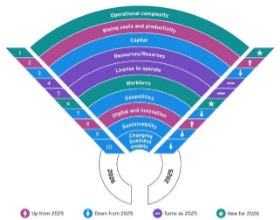
LTO Retains Its Strategic Weight Amid New Operational Pressures
The latest EY global survey of mining and metals executives confirms that while operational complexity has climbed to the top of the industry’s risk agenda—driven by deeper orebodies, declining grades and rising input costs—License to Operate (LTO) remains firmly within the top five risks worldwide. The finding reinforces that social acceptance, regulatory confidence and community legitimacy are inseparable from operational performance. Even as companies invest heavily in efficiency and technology, license resilience continues to shape the feasibility and timing of major projects.
Stakeholder Expectations Are Rising Faster Than Corporate Adjustments
EY highlights that government budget pressures in many regions have raised expectations for mining companies to play a larger role in local development, service provision and economic integration. This shift is pushing the sector to move beyond transactional community relations toward models that deliver sustained value—local procurement, skills development, infrastructure co-investment and transparent governance. As the survey warns, companies that “do only what is regulated” increasingly struggle to secure approvals, attract talent or maintain uninterrupted operations.
Global Implications for Africa and Emerging Markets
For African and Latin American jurisdictions, the message is clear: geological potential alone is no longer enough to attract capital at scale. Investors are scrutinizing not just ore bodies but institutional capacity, regulatory predictability and community partnership models. In this landscape, LTO is both a risk and an opportunity—projects that align their operations with host-community priorities can accelerate permitting and reduce costs, while those that neglect local expectations face mounting delays and reputational exposure. The 2025 survey underscores that social legitimacy remains one of the strongest determinants of mining competitiveness in the energy-transition era.