
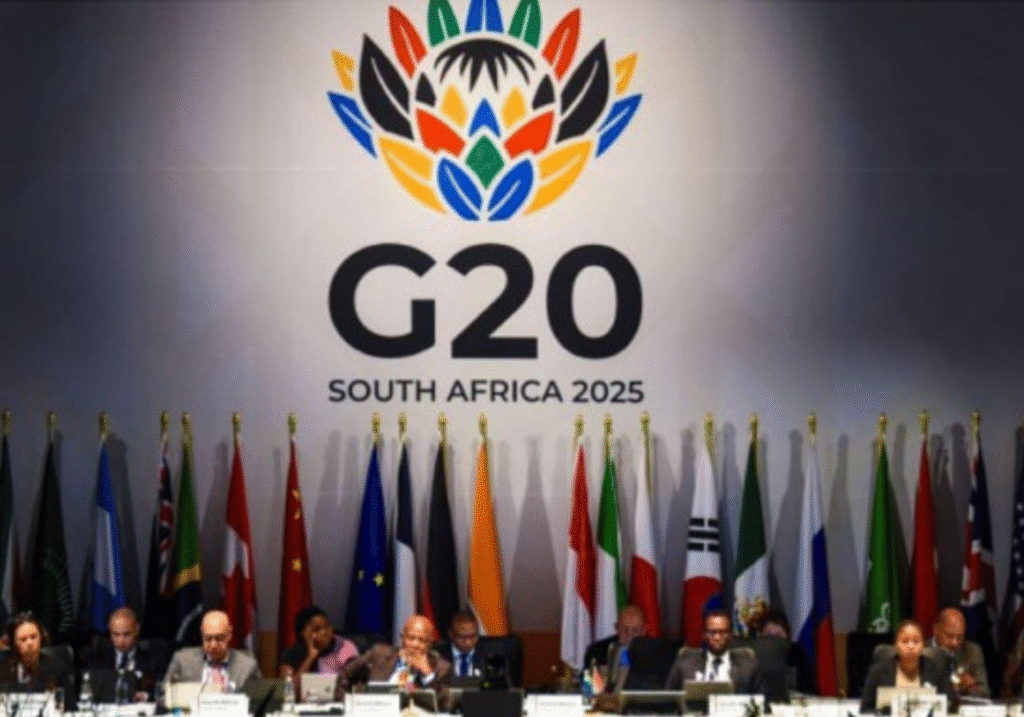
A Summit Stage for Resource Sovereignty
At the first-ever G20 summit hosted on African soil, leaders from across the continent projected a unified message: Africa holds close to a third of the world’s critical-mineral reserves and intends to play a far more decisive role in how these resources are governed, processed and integrated into global supply chains. The meeting provided an unusual moment of collective visibility, allowing African governments to articulate a vision that goes beyond raw-material supply toward a model based on strategic influence and shared industrial ambition.
From Raw Exports to Regional Value Creation
The discussions underscored a shift away from the long-standing pattern in which Africa captures only a small fraction of the value embedded in clean-energy technologies. With demand surging for copper, cobalt, nickel, manganese and rare earths, multiple countries highlighted concrete steps to build refining capacity, processing hubs and battery-material corridors. Zambia and the Democratic Republic of the Congo emphasized special economic zones tied to the battery supply chain, while South Africa and Namibia promoted industrial policies aimed at scaling hydrogen infrastructure and rare-earth separation. The message was consistent: the continent will not achieve structural transformation by exporting ore alone.
A Redefinition of Africa’s Role in the Global Minerals Economy
Africa’s push at the G20 signals a broader rethinking of global mineral dependencies and the distribution of industrial power. Rather than remaining peripheral to decision-making, African producers are seeking a place in the midstream of supply chains where technological capability, pricing influence and long-term economic gains are concentrated. For global markets, this shift introduces new competitive dynamics that could broaden supply options and reduce the bottlenecks associated with highly concentrated processing hubs. For African economies, it marks an attempt to align mineral wealth with lasting development—shaping not just how the world sources its minerals, but how value, jobs and strategic influence are generated across the continent.