
A Security Measure with Wide Economic Ripples
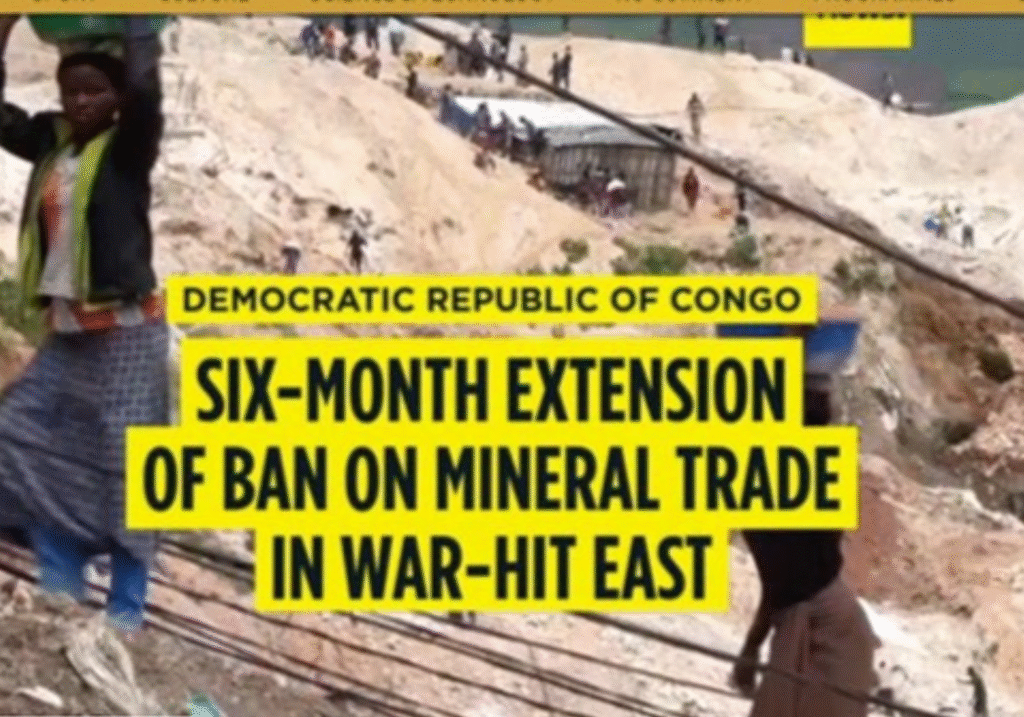
The government of the Democratic Republic of the Congo announced a six-month extension of its ban on the trade of minerals sourced from 38 artisanal mining sites across North and South Kivu. The decision follows renewed evidence that armed groups continue to infiltrate the cobalt, cassiterite, tantalum and gold supply chains in these provinces. Although the measure is framed as a security intervention, its implications reach far beyond enforcement: it restricts informal miners’ livelihoods, disrupts regional traders and places pressure on downstream buyers who rely on conflict-free certification to maintain market access.
The Persistent Vulnerability of Artisanal Supply Chains
The extension highlights the structural fragility of artisanal mining in eastern Congo, where thousands of miners operate outside formal oversight and remain exposed to extortion and violence from armed actors. Despite years of donor-funded programs designed to certify “clean” sites, the reality on the ground remains volatile, with checkpoints, illegal taxes and shifting militia control undermining progress. By reimposing the ban, the government seeks to break financial linkages between mining and conflict, yet it also risks exacerbating tensions if alternative livelihoods or credible state presence fail to materialize. For many communities, the mineral economy remains the only viable source of income.
Reframing the Debate on Responsible Minerals and Market Access
This development forces a broader reflection on how global supply chains interact with fragile states. As companies face rising expectations to prove that their inputs are conflict-free, the short-term effect of such bans is often uncertainty, price distortions and reduced legal trade. In the long term, however, the policy underscores a foundational challenge: responsible sourcing cannot succeed without parallel investments in governance, security and community stability. Congo’s decision is a reminder that mineral governance in conflict zones is not simply about tracking ore—it is about addressing the conditions that make exploitation possible. The global minerals economy increasingly hinges on whether countries like the DRC can align resource wealth with institutions capable of protecting both people and markets.