
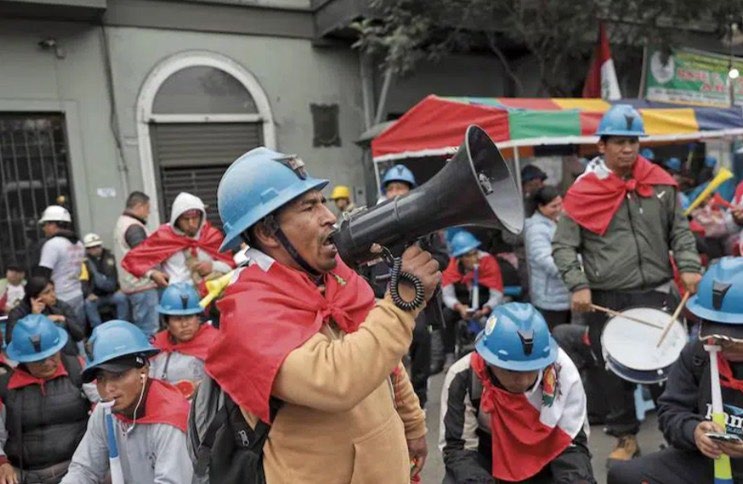
REINFO Returns to the Political Agenda
On November 28, 2025, Peru’s Congress confirmed that the proposal to extend the Integral Mining Formalization Registry (REINFO) until 2027 will be debated in the Plenary session during the first week of December. The initiative, previously approved by the Congressional Energy and Mines Committee, has now completed procedural requirements and is formally ready for legislative discussion. The proposal would allow more than 50,000 informal miners previously excluded from the registry to re-enter the formalization process.
Formalization as a Structural LTO Challenge
The impending debate underscores the central role of mining formalization in Peru’s broader License to Operate landscape. REINFO has long functioned as both a policy instrument and a social buffer, managing tensions between the State, small-scale miners, communities, and large-scale operators. Proposals to extend or modify the registry reflect an underlying dilemma: while formalization aims to reduce illegality and environmental risk, repeated extensions also reveal the State’s limited capacity to fully integrate informal actors into a regulated system. As a result, formalization remains a source of recurring tension rather than a stable governance solution.
Why the REINFO Debate Matters Beyond Regulation
From a stakeholder perspective, the REINFO discussion goes beyond technical mining policy. It directly affects livelihoods, territorial governance, environmental legitimacy, and the credibility of the State as a mediator between competing interests. For large-scale projects and regional authorities, continued uncertainty around informal mining complicates social relations and weakens prospects for shared prosperity. Whether Congress opts for a one-year or multi-year extension, the outcome will signal how Peru intends to balance short-term social stability with long-term institutional clarity—an essential condition for transforming social acceptance into durable regional development.