
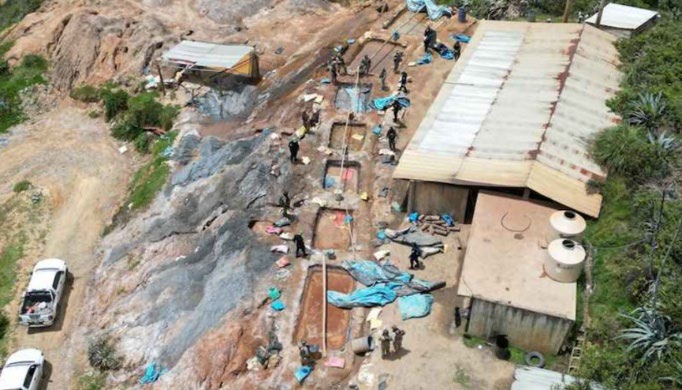
A Sustained Enforcement Offensive in a High-Risk Mining Corridor
On November 27, 2025, Peru’s Unified Command Pataz (CUPAZ) carried out Operation “Martillo II”, dismantling infrastructure linked to illegal gold mining in the province of Pataz, La Libertad. The operation resulted in the interdiction of equipment, processing assets, fuel, chemicals, and mineral stockpiles used in illicit activities, delivering a significant blow to illegal mining operations in the area. The action was conducted under the State of Emergency framework, with security forces operating alongside multiple state agencies.
Illegal Mining as a Structural Threat to License to Operate
The scale and recurrence of operations such as Martillo II underscore the depth of illegal mining entrenchment in Pataz, where criminal networks, informal operations, and violence have increasingly distorted territorial governance. From a License to Operate perspective, illegal mining represents a systemic risk: it erodes community trust, fuels insecurity, damages the environment, and undermines the legitimacy of formal mining activities operating under legal and regulatory frameworks. Enforcement actions help restore state authority, but they also reveal how fragile social and institutional control remains in mineral-rich territories.
From Enforcement to the Challenge of Sustainable Prosperity
While sustained interdiction weakens illicit economies—building on prior operations that have cumulatively impacted illegal mining finances on a much larger scale—the longer-term challenge lies beyond enforcement. For Pataz, restoring social license and advancing toward stakeholder prosperity will require parallel progress on formalization, alternative livelihoods, territorial development, and effective state presence beyond security operations. The experience in Pataz highlights a broader lesson for Peru: enforcing the law is a necessary condition to protect legitimate economic activity, but transforming security gains into durable regional prosperity remains the defining test of governance in mining regions.