
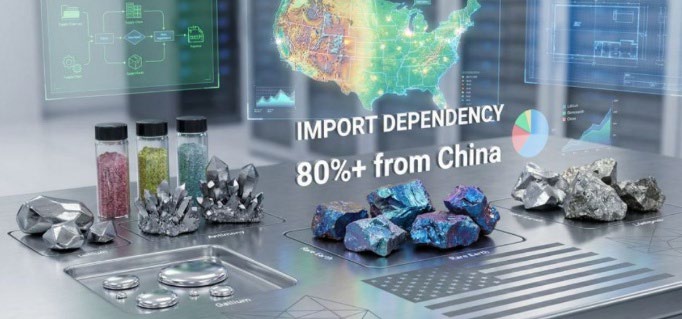
A National Push to Reduce Import Dependence and Strengthen Supply Resilience
In early December 2025, new analyses highlighted how the United States is accelerating its industrial strategy for critical-minerals security, aiming to reduce reliance on foreign suppliers and stabilize inputs essential for clean-energy manufacturing. Through coordinated actions involving the Department of Energy, EXIM Bank, the Development Finance Corporation (DFC), and the Departments of Defense and State, Washington is expanding financial support, strategic stockpiles, and international partnerships. The evolving strategy reflects a bipartisan understanding that securing minerals such as lithium, nickel, graphite, cobalt, and rare earths is now central to industrial competitiveness, national security, and climate objectives.
Financing Tools, International Partnerships, and Domestic Capacity Building
Recent measures include large-scale DFC and EXIM financing packages for allied mining and processing projects in Egypt, Pakistan, and parts of Europe, along with incentives to expand domestic refining and metallurgical capacity in the U.S. Analysts note that the government is prioritizing supply-chain segments where vulnerability is highest—especially processing and separation, where China maintains a dominant position. At home, the strategy encourages private investment through tax credits, permitting support, and long-term offtake agreements linked to battery manufacturing, semiconductor expansion, and defense applications. America is effectively attempting to build a diversified “portfolio” of supply routes that blend domestic production with secure imports from trusted partners.
A Redefined Role for Minerals in America’s Economic and Strategic Architecture
The emerging framework signals a significant shift: critical minerals are now treated as foundational infrastructure for the 21st-century economy, not just as commodities. By combining industrial policy, diplomatic engagement, and targeted financing, the U.S. aims to shape a more predictable and transparent global supply environment—one less exposed to geopolitical shocks and market concentration. The long-term success of this strategy will depend on regulatory coherence, environmental credibility, and the ability to align federal initiatives with private-sector investment. For global markets, the message is clear: the United States is positioning minerals security as a pillar of economic resilience, technological leadership, and strategic autonomy.