
A Large-Scale Enforcement Effort With Record Seizures
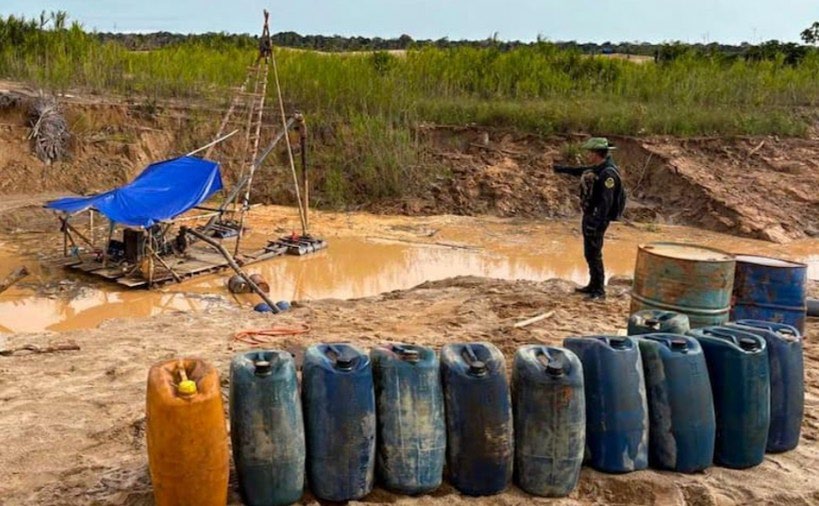
During the first week of December 2025, the High Commissioner for the Fight Against Illegal Mining reported the execution of 960 enforcement operations across multiple regions, resulting in the destruction of more than S/3.700 million in machinery and equipment used in criminal mining. The joint actions of the National Police, the Navy, and environmental prosecutors mark one of the most aggressive state interventions to date in territories long dominated by illegal networks. The current strategy emphasizes direct intervention, consolidation of state presence, and sustained territorial control through permanent security outposts in high-risk areas such as Pataz.
Beyond Enforcement: The Challenge of Stabilizing Territories
The operations form part of a wider multisectoral agenda centered on three pillars: formalization of small-scale miners, eradication of illegal activity, and environmental recovery. Authorities argue that long-term stability requires more than destroying equipment; it demands restoring degraded ecosystems, improving local infrastructure and services, and promoting alternative livelihoods that reduce communities’ dependency on illicit economies. Yet institutional gaps—particularly the limited resourcing of environmental prosecutors—continue to constrain the state’s ability to sustain enforcement gains and support territorial recovery.
REINFO at the Heart of a Critical Governance Debate
The discussion surrounding REINFO exposes a deeper structural tension. With only about 2% of miners completing the formalization process, the High Commissioner warned that reinstating over 50,000 excluded records—or preventing the exclusion of noncompliant operators—would undermine efforts to combat illegal mining and strengthen criminal economies. Keeping a registry populated by actors operating outside legal, environmental, or territorial norms risks legitimizing illicit activity and weakening state authority. The broader lesson is clear: Peru’s path toward stakeholder prosperity depends on aligning formalization, environmental protection, and viable economic alternatives, ensuring that enforcement efforts translate into durable legitimacy and improved local well-being.