
Title: Scales of Trust: An Exploration of the Social Licence to Operate of Mining at the Societal Level
Author/Institution: P. Lesser, University of Lapland
Publication Year: 2024
Why Social Licence Must Be Understood at Multiple Scales
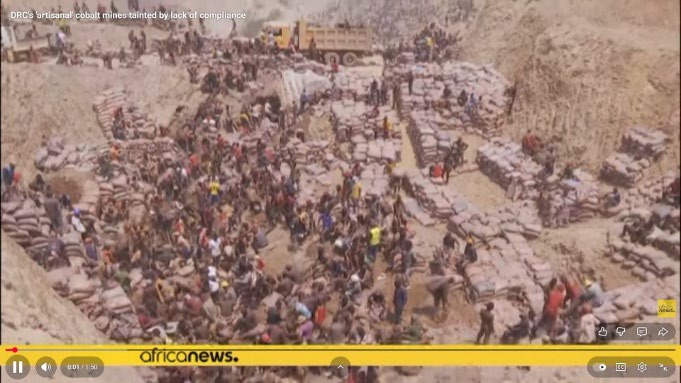
Lesser’s dissertation represents one of the most comprehensive attempts to move the concept of Social Licence to Operate (SLO) beyond the local community and into the realm of national politics, institutions, and societal trust. Drawing on case studies from Northern Europe and comparative insights from global mining regions, the research argues that SLO cannot be understood only through company–communityrelations. Instead, legitimacy is shaped simultaneously at local, regional, and societal scales, where expectations about environmental protection, economic fairness, Indigenous rights, and state capacity converge. When national-level trust in mining governance erodes—as seen in debates about informal mining in Peru or cobalt oversight in the DRC—companies may face resistance even from communities where local relationships are strong. Likewise, when national institutions are perceived as weak or compromised, large-scale projects struggle to secure durable legitimacy regardless of their technical or social performance on the ground.
Methodological Contribution: Trust as the Central Analytical Lens
Lesser’s framework is built on a combination of ethnographic fieldwork, institutional analysis, and trust theory. By examining how different social groups, local communities, civil society, regulators, national publics—interpret mining risks and benefits, the dissertation shows that trust operates across a spectrum, from interpersonal trust (between residents and company representatives) to systemic trust (confidence in regulatory regimes, state oversight, and industry-wide commitments). A critical insight is that societal-scale legitimacy often hinges not on what a single company does, but on collective patterns of industry behavior, cumulative environmental impacts, and the perceived effectiveness of oversight institutions. For example, persistent illegal mining in the DRC or REINFO extensions in Peru signal governance fragility, which in turn heightens public skepticism toward mining more broadly. Lesser demonstrates that legitimacy failures often originate not in project-level interactions, but in wider societal narratives about fairness, transparency, and historical grievances.
Implications for Social License, Governance, and Stakeholder Prosperity
Lesser’s work has profound relevance for contemporary debates on stakeholder prosperity and the evolving meaning of License to Operate. The key argument is that mining companies cannot secure long-term legitimacy solely through community agreements or compensation programs; they must operate within governance systems that society perceives as fair, competent, and aligned with public interest. Where institutional trust is low—whether due to corruption, policy inconsistency, weak enforcement, or persistent informality—social license becomes fragile and prone to rapid erosion. The dissertation reinforces that stakeholder prosperity depends on multi-level trust-building, including transparent national policies, credible enforcement mechanisms, industry-wide standards, and meaningful participation of affected populations. For regions undergoing rapid change—Peru’s formalization struggles, the DRC’s cobalt export controls, or displacement controversies along the Lobito Corridor—the lesson is unmistakable: social license must be earned simultaneously from communities, institutions, and society at large. Sustainable mining outcomes require not only local acceptance but also a societal consensus that extraction is governed responsibly and delivers shared value.