
Advancing the East African Crude Oil Pipeline
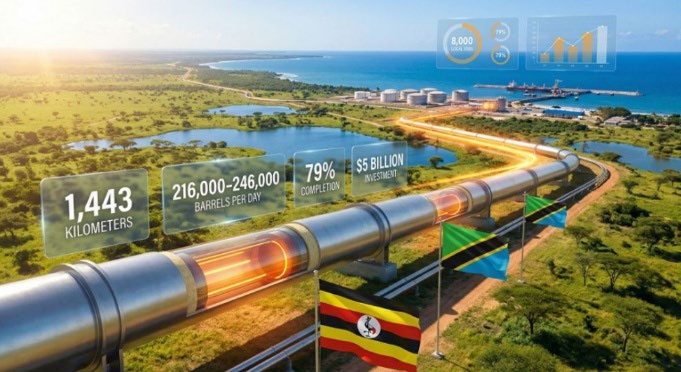
In February 2026, renewed attention focused on the East African Crude Oil Pipeline (EACOP) and related cross-border energy infrastructure initiatives linking upstream production zones to export terminals. The pipeline, designed to transport crude from inland oil fields to coastal facilities, represents one of the most ambitious regional infrastructure undertakings in Sub-Saharan Africa. Beyond its engineering scale, the project reflects a broader effort to position East Africa within global energy trade networks through integrated logistics corridors.
Infrastructure Coordination Across Jurisdictions
Cross-border energy infrastructure requires coordinated regulatory alignment, fiscal agreements, and environmental oversight between participating states. Pipeline construction intersects with land acquisition frameworks, community engagement processes, biodiversity safeguards, and financing structures that span multiple jurisdictions. The success of such projects depends not only on technical execution but on harmonized policy environments capable of sustaining long-term operational stability. As energy corridors expand, intergovernmental cooperation becomes a structural prerequisite for investor confidence.
Energy Security, Transition, and Governance Balance
Large-scale oil infrastructure in an era of accelerating energy transition introduces strategic tension. While such projects promise export revenue, employment, and fiscal inflows, they must navigate evolving climate expectations and global capital scrutiny. For East African states, the pathway forward involves balancing immediate development objectives with long-term diversification and energy transition planning. The durability of cross-border infrastructure will ultimately depend on institutional credibility, transparent governance, and the ability to integrate energy expansion within broader economic resilience strategies.