
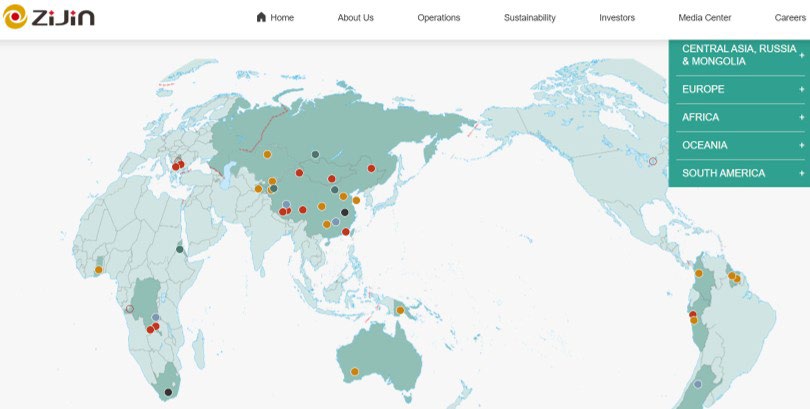
Production Plans Advance Amid Ownership Disputes
On 11 February 2026, Reuters reported that China’s Zijin Mining plans to begin lithium production in June from the Manono deposit in the Democratic Republic of Congo. The project, positioned as Congo’s first lithium out put, marks a significant step in expanding the country’s participation in the global battery- materials market beyond cobalt and copper. However, the Manono asset has been subject to legal and contractual disputes involving competing stakeholders, raising questions about ownership rights and concession validity even as operational timelines advance.
Strategic Diversification and Supply-Chain Positioning
For China, Manono represents a strategic extension of its footprint in upstream lithium resources at a time of intensifying global competition for battery inputs. For the DRC, the project signals diversification within its mineral portfolio, aligning the country more directly with the electric-vehicle and energy-storage value chain. Yet the combination of high geological potential and contested contractual claims underscores a recurring governance tension: large-scale mineral projects in emerging jurisdictions often advance within complex legal environments where dispute resolution mechanisms are still being tested.
Governance Stability as a Determinant of Market Credibility
The long-term significance of Manono will depend not only on production volumes but on the stability of its legal framework and the clarity of state oversight. In a market increasingly sensitive to supply-chain reliability and responsible sourcing standards, unresolved ownership conflicts can affect investor confidence and downstream partnerships. As lithium joins cobalt and copper as a pillar of Congo’s mineral strategy, the durability of the project—and the credibility of future lithium developments—will hinge on transparent governance, enforceable contracts, and sustained institutional consistency.