
Strategic Realignment Driven by the United States
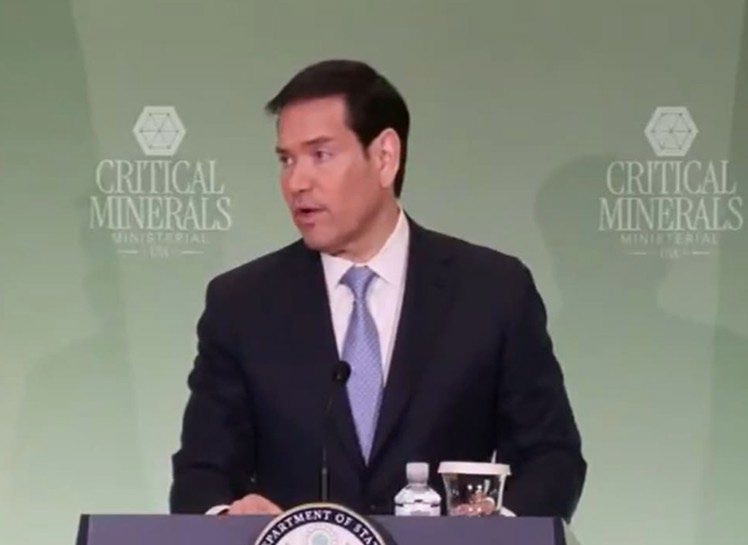
In early February, a U.S.-hosted international conference brought together more than 50 countries to coordinate policy approaches to critical minerals. The initiative reflects a broader strategic recalibration by Washington as it responds to intensifying geopolitical competition with China. U.S. policy priorities are increasingly centered on securing supply chains, safeguarding energy systems, and consolidating access to minerals essential for electrification, advanced manufacturing, digital infrastructure, and artificial intelligence. Within this evolving framework, Peru is positioned as a reliable supplier of copper in a network of partner countries viewed as stable and strategically aligned.
Copper Reframed as a Strategic Asset
The recent inclusion of copper on the U.S. Geological Survey’s official list of critical minerals marks a notable shift in global mineral policy. As the second-largest copper producer with long-life reserves, Peru gains strategic visibility in supply-chain planning discussions. Its reserve horizon—estimated to extend for decades—provides medium- to long-term supply certainty in a market facing structural demand growth. At the same time, much of Peru’s copper continues to be refined in China, highlighting a value-chain asymmetry. The emerging debate on relocating or diversifying refining capacity toward the Americas presents both an opportunity and a governance challenge for Peru, requiring infrastructure investment, regulatory coherence, and capital mobilization.
Geopolitical Competition and Institutional Balance
Growing U.S. engagement does not automatically displace other investors. Chinese, Canadian, Australian, and other international actors remain active participants in Peru’s mining sector. The country’s strategic advantage lies not in exclusive alignment, but in its ability to navigate competitive interest without becoming a theater of geopolitical friction. As long as competition for Peruvian copper remains commercially structured and institutionally bounded, Peru stands to benefit from diversified investment flows and favorable market dynamics. The long-term outcome, however, will depend on institutional credibility, diplomatic balance, and the capacity to translate geological strength into sustained stakeholder legitimacy.