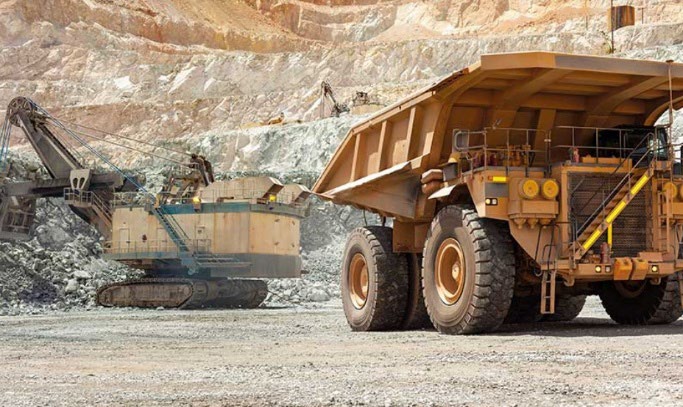
High Prices, Moderate Output: The Investment Paradox
The year 2025 leaves behind a mining balance marked by structural contrasts: historically strong copper, gold, and silver prices coexisting with only modest growth in investment and production. Despite five consecutive years of elevated metal prices, the pipeline of large-scale projects remains limited, with only two major projects under construction—Tía María and Zafranal, both in Arequipa—and none approaching the multi-billion-dollar scale of Las Bambas or Quellaveco. This divergence between favorable price cycles and restrained capital deployment suggests that non-geological variables—regulatory uncertainty, permitting timelines, and social risk management— continue to shape investor behavior more decisively than market signals alone, reinforcing the perception of a partially missed opportunity window.
Informality, Gold Prices, and Governance Stress
A second defining feature of 2025 has been the visible expansion of informal and illegal mining, particularly in the gold segment, where high international prices have amplified profitability and operational reach.
While the State attempted regulatory containment measures, enforcement gaps and legislative fragmentation limited their effectiveness. As informal production expands, associated environmental degradation, violence, and criminal networks increasingly intersect with territorial governance, elevating mining informality from a sectoral issue to a broader institutional risk. In an electoral cycle that combines national and subnational elections in 2026, policy continuity and enforcement credibility will be tested at a moment when strategic clarity is most needed.
Balance and Outlook: Incremental Growth under Structural Constraints
Production performance in 2025 was moderately positive, supported by capacity expansions yet constrained by declining ore grades and operational pressures. Between January and October, mining output rose approximately 2.9%, with year-end growth estimated near 2%, driven primarily by copper (+3%) and zinc (+18.8%). The expansion of Las Bambas—both in Ferrobamba and the newer Chalcobamba pit— contributed to copper output, though this was partially offset by lower grades at Cerro Verde, Antamina, and Toquepala. Looking toward 2026, the sector’s trajectory will depend less on price conditions—which remain favorable—and more on institutional predictability, project pipeline activation, and the State’s capacity to address informality without undermining formal investment confidence.
Issue 36, Mining & Critical Minerals, Peru
Peru’s Mining Sector in 2025 and Projections Toward 2026