Finance-Led Resource Diplomacy in Central Asia
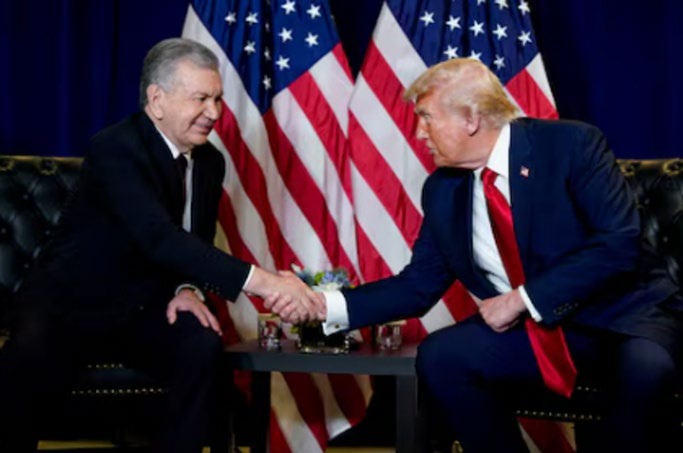
The United States’ critical minerals pact with Uzbekistan signals a finance-forward approach to securing upstream and midstream options outside China-dominated corridors. Rather than a traditional trade agreement, the arrangement is structured as a “Joint Investment Framework” anchored by the U.S. International Development Finance Corporation (DFC), explicitly designed to mobilize investment across exploration, extraction, and processing. This format reflects a broader shift in U.S. resource diplomacy: supply security is increasingly pursued through capital vehicles, co-investment platforms, and deal architecture that can move projects from intent to bankability. By elevating Uzbekistan—resource-rich and strategically located between Russia and China— Washington is treating Central Asia as more than a peripheral zone, repositioning it as a meaningful node in the emerging critical minerals map.
From Ore Access to Value-Chain Optionality
Uzbekistan’s strategic appeal lies in its mineral breadth and reform momentum: significant reserves of gold, uranium, copper, lithium, and tungsten provide multi-commodity relevance, while ongoing economic reforms expand the space for structured foreign partnerships. The pact’s emphasis on processing—not just extraction—suggests that Washington is seeking value-chain optionality, not merely alternative ore supply. A proposed joint investment holding company reinforces that intent, pointing toward a longer-term pipeline of mineral and infrastructure projects rather than a single transaction. If implemented credibly, the framework could help Uzbekistan move beyond a classic exporter model and position itself as a partial processing partner—an outcome that would incrementally reduce the global system’s overreliance on a single dominant refining geography.
Strategic Signal to China, Execution Test for Both Sides
The pact is also a geopolitical signal embedded in commercial language: it fits within Washington’s broader effort to counter China’s leverage in critical mineral supply chains without requiring immediate confrontation. Yet the strategic value of the agreement will be determined by execution rather than announcement—project selection, permitting realities, ESG and traceability standards, and the ability to align financing with operational delivery. For Uzbekistan, credibility will hinge on whether reforms translate into predictable investment conditions; for the United States, success will depend on whether this model produces real, scalable projects that can compete with China’s established speed and integration. In short, the agreement is strategically coherent on paper, but its real impact will be measured in bankable projects and delivered tonnage, not diplomatic visibility.
Issue 36, Mining & Critical Minerals, USA
U.S. and Uzbekistan Sign a Critical Minerals Pact