Domestic Processing as Strategic Recalibration
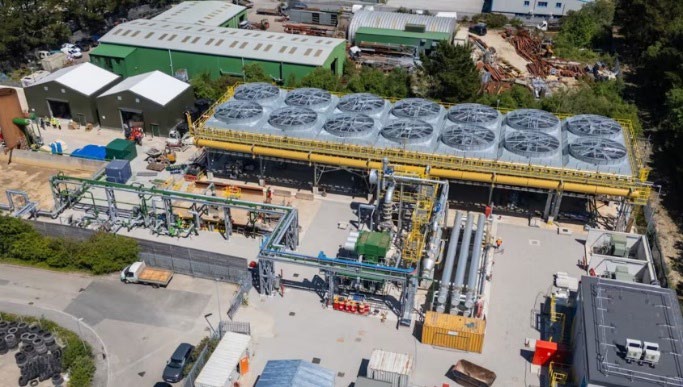
The inauguration of the United Kingdom’s first commercial-scale lithium production facility in Cornwall marks a strategic attempt to reposition the country within the critical minerals value chain. Historically dependent on imported lithium chemicals for battery manufacturing and electric vehicle deployment, the UK is now seeking partial upstream and midstream autonomy. The project reflects a broader European recognition that supply-chain resilience requires not only access to raw materials but also domestic refining and processing capacity capable of insulating manufacturers from geopolitical disruptions.
From Geological Potential to Industrial Activation
Cornwall’s lithium-bearing geothermal brines represent an unconventional resource base that integrates extraction with renewable energy generation. The plant’s commercial activation signals confidence in scalable extraction technologies and highlights the UK’s willingness to deploy capital toward emerging processing models. While output volumes remain modest relative to global leaders, the symbolic and structural importance lies in establishing proof-of-concept for domestic production in a country not traditionally associated with large-scale mineral extraction.
Strategic Implications for European Supply Chains
The project strengthens Europe’s effort to reduce dependency on Chinese lithium conversion capacity, which continues to dominate global hydroxide and carbonate markets. Although the UK alone cannot materially shift global supply balances, incremental domestic production contributes to a diversified sourcing matrix. The long-term strategic question will be whether the UK can scale processing competitively and integrate downstream battery manufacturing within its industrial base, thereby converting resource innovation into durable economic positioning.
Issue 36, Mining & Critical Minerals
United Kingdom Launches First Commercial Lithium Plant