
Strategic Reserves and Rising Global Relevance
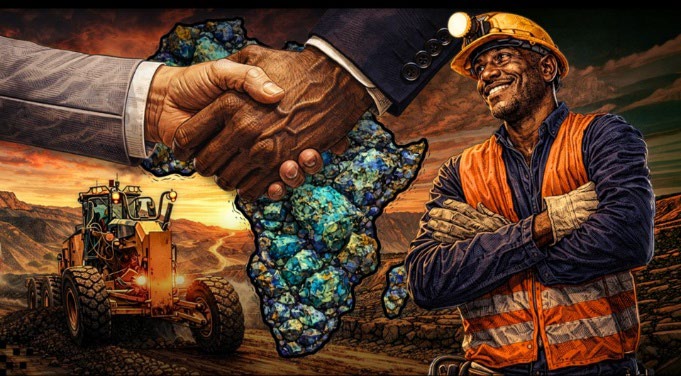
Africa is consolidating its role as a critical source of minerals essential to the global energy transition. The continent hosts major reserves of lithium, cobalt, manganese, graphite, and rare earth elements—inputs that underpin batteries, electric mobility, and renewable energy systems. As demand accelerates and supply-chain concentration becomes a strategic concern for consuming economies, Africa’s mineral endowment is gaining renewed geopolitical and industrial relevance.
From Extraction to Value Addition and Industrial Policy
A growing number of African governments are seeking to shift from raw-material exports toward domestic processing and downstream value creation. Policy moves, ranging from export restrictions to incentives for refining and beneficiation, reflect an effort to capture a larger share of the energy-transition value chain. This push is also framed as an industrial development strategy: building jobs, strengthening fiscal revenues, and reducing dependence on commodity cycles through more diversified mineral-based manufacturing.
Opportunity Conditioned by Governance and Infrastructure
Africa’s ability to translate mineral wealth into durable economic gains will depend on regulatory credibility, infrastructure readiness, and sustained social license management. Investors and downstream buyers increasingly prioritize traceability, ESG compliance, and stable permitting environments—factors that remain uneven across the continent. If governance performance improves alongside targeted infrastructure investment, Africa could shift from being primarily a mineral supplier to becoming a structurally relevant platform for energy-transition supply security and value-chain diversification.