
From Episodic Engagement to Structured Dialogue
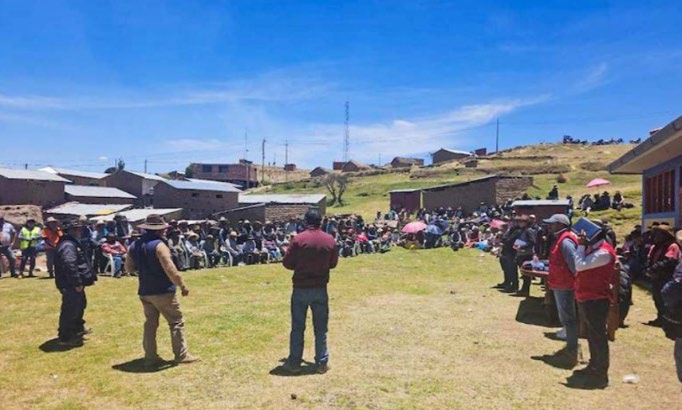
In late November 2025, Las Bambas and the Community of Tuntuma advanced discussions toward a new Cooperation Agreement, signaling a renewed effort to stabilize their relationship through formalized commitments and institutional dialogue mechanisms. The initiative reflects a shared recognition that ad-hoc engagement is insufficient in a context where expectations around local development, access to opportunities, and project continuity remain highly sensitive. By working toward a structured framework, both parties seek to replace reactive interactions with predictable channels for communication and problem-solving.
Institutionalizing Expectations in a High-Sensitivity Mining Corridor
The move comes against the backdrop of recurrent social tensions in Peru’s southern mining corridor, where unresolved local demands have frequently translated into disruptions. Cooperation agreements such as the one under discussion serve a critical function: they make expectations explicit, define responsibilities, and establish procedures for addressing grievances before they escalate. For the community, this offers greater clarity on development commitments and timelines; for the project, it reduces uncertainty and the risk of sudden operational interruption. The value of the process lies not only in the commitments themselves, but in the governance architecture they create.
What This Signals for License to Operate in Peru
This case illustrates License to Operate as a preventive and relational process, rather than a reaction to conflict. In the Peruvian mining context, where legitimacy is continuously tested at the local level, the capacity to institutionalize dialogue is a key determinant of operational resilience. Las Bambas’ engagement with Tuntuma highlights a broader lesson: durable LTO is built through negotiated frameworks that manage expectations over time, not through short-term concessions. As Peru continues to balance mineral production with social stability, such agreements will remain central to sustaining both project continuity and community trust.