
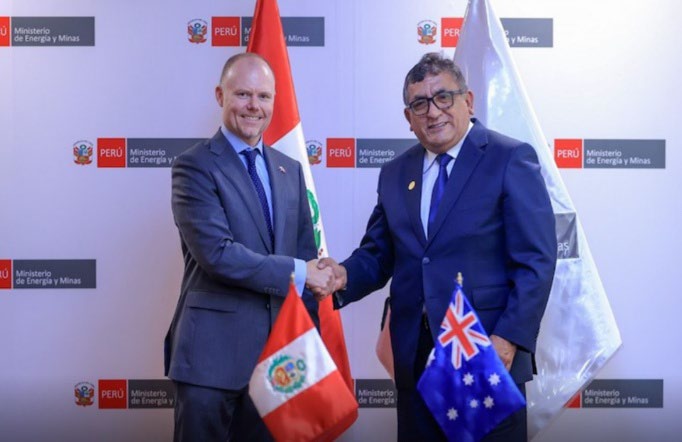
Australia Reaffirms Strategic Engagement in Peru
In mid-February, Peru’s Minister of Energy and Mines met with Australia’s newly appointed ambassador, who reaffirmed his country’s intention to deepen strategic cooperation in the mining sector. The discussion underscored mining as the central pillar of bilateral relations, reflecting long-standing complementarities between Peru’s resource base and Australia’s technical expertise. The ambassador emphasized the importance of strengthening collaboration not only at the diplomatic level but also through expanded private-sector participation, particularly in services, technology, and equipment linked to mining operations.
Technology, Exploration, and Industrial Footprint
Australia’s engagement extends beyond symbolic diplomacy. The ambassador highlighted ongoing and prospective investment initiatives, including exploration activities by junior companies and industrial infrastructure development. One example cited was the discovery of a gold–silver porphyry target in Arequipa by an Australian exploration firm, reinforcing Australia’s presence in early-stage mineral development. Another was the construction of a modern steel foundry facility in Chilca by an Australian company, representing an investment exceeding US$100 million. These projects signal a dual-track approach: upstream exploration in critical and precious minerals, and downstream industrial capacity that strengthens Peru’s domestic supply chain.
Cooperation as Competitive Positioning
The bilateral dialogue reflects a broader trend in global mining diplomacy, where technologically advanced jurisdictions seek deeper integration with resource-rich partners. For Peru, diversified foreign participation reduces concentration risk and reinforces its reputation as an open and competitive investment destination. For Australia, expanded METS engagement enhances its international footprint in a region central to future mineral supply. The long-term significance of this partnership will depend on regulatory predictability, local value integration, and sustained institutional coordination. In a global context defined by mineral security and supply-chain realignment, such bilateral cooperation becomes both an economic instrument and a strategic signal.