
Multisectoral Deployment Beyond a Single Territory
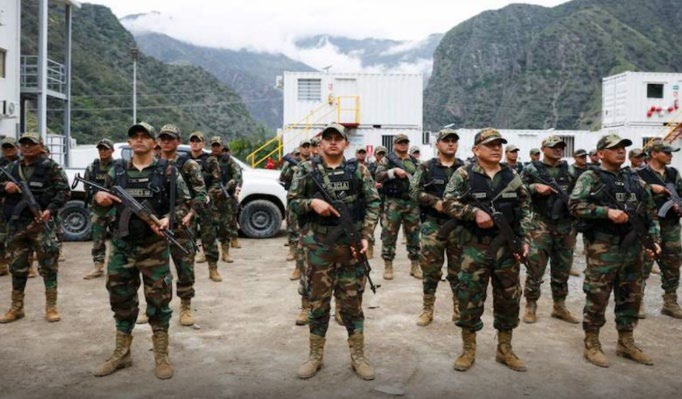
Peru’s Executive Branch has announced plans to replicate the “Pataz Model” of integrated intervention in Cajamarca and other high-risk regions as part of an intensified strategy against illegal mining and organized crime. According to the Minister of Energy and Mines, the approach—initially implemented in Pataz (La Libertad)—will be deployed during the second quarter of the year, prioritizing territories characterized by entrenched informal and criminal mining networks. The strategy involves a unified command structure bringing together security forces and multiple executive agencies, alongside fiscal control routes, strengthening oversight of inputs through the SIPMMA system, and sustained territorial presence designed to reestablish state authority in critical zones.
From Field Control to Legal Chain Enforcement
The replication effort extends beyond physical enforcement operations. Authorities have emphasized investments in infrastructure, weighing stations, communications systems, and digital monitoring tools to support field-level control. Complementing operational measures, recent legislative reforms—particularly Legislative Decree 1695, expand criminal liability across the entire illegal mining value chain, including transport, storage, and commercialization of illicit minerals. By targeting logistics and commercialization networks, the government seeks to disrupt the economic architecture sustaining illegal extraction rather than focusing solely on site-level interventions.
Pipeline Territorial Governance and Economic Coexistence
Cajamarca represents both a major formal mining hub and a region vulnerable to illegal activity. Official data highlight significant formal mining investment, employment generation, and fiscal transfers through royalties and canon payments. The government’s challenge lies in reinforcing territorial governance without destabilizing legitimate economic activity. The success of scaling the Pataz Model will depend on sustained inter-institutional coordination, predictable enforcement, and credible alternatives that prevent illegal networks from reconstructing themselves. In a broader governance context, replicating such interventions becomes not only a security strategy but a test of the state’s capacity to align legality, economic contribution, and institutional legitimacy across mining regions.