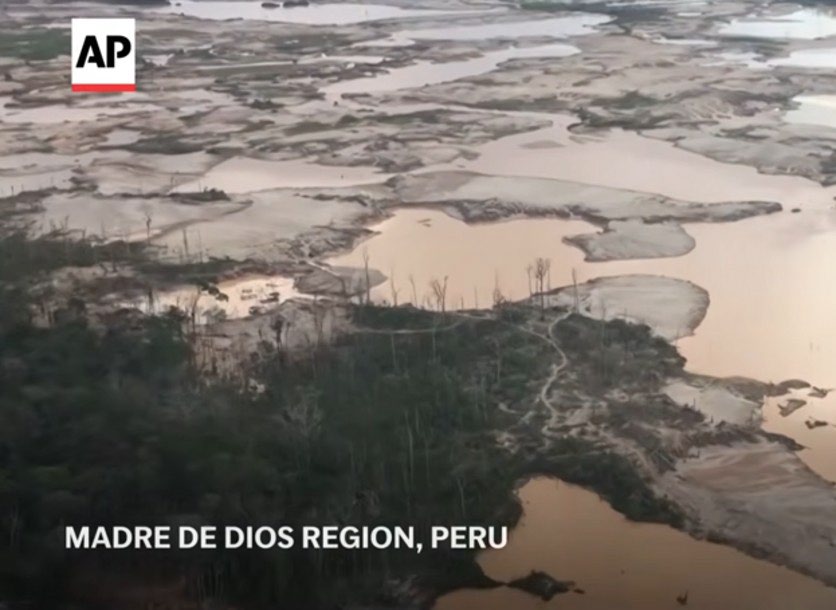
Rapid Expansion Beyond Traditional Hotspots
Illegal gold mining in the Peruvian Amazon is spreading beyond long-established areas like Madre de Dios into previously untouched regions such as Loreto, Ucayali and Huánuco, contaminating rivers and threatening remote Indigenous territories. Bulldozers clear forest, floating dredges suck up riverbed sediment, and processing leaves behind mercury-contaminated water bodies, creating a widening environmental and public health crisis. This outbreak of unregulated mining activity is increasingly linked to global gold prices near historic highs, making remote extraction economically viable despite legal prohibitions.
Community Vulnerability and Health Risks
Indigenous leaders and environmental experts report that the expansion of illegal mining is jeopardizing both ecosystems and local livelihoods. Mercury pollution — used to extract gold from river sediments — enters aquatic food chains, posing severe threats to human health, particularly for communities reliant on fish as a dietary staple. Local Indigenous representatives have described how outside miners quickly cut forest cover and degrade waterways, intensifying land and resource conflict.
Governance Gaps and Enforcement Challenges
Despite official assertions of stepped-up enforcement by Peru’s anti-illegal mining authorities, the sheer geographic reach of the illicit operations highlights persistent governance deficits. The rapid spread into remote corners of the Amazon underscores weak territorial control, limited state presence, and the inability of regulatory frameworks to contain unlicensed extractive activities. The situation illustrates that sustainable licence-to-operate environments depend not only on legal prohibitions, but on effective enforcement and community protection — both of which are struggling to keep pace with the advance of illegal mining frontiers.
Issue 36, License to Operate (LTO) Conflicts, Peru
Peru: Illegal Gold Mining Expands Deep into the Amazon, Impacting Communities