
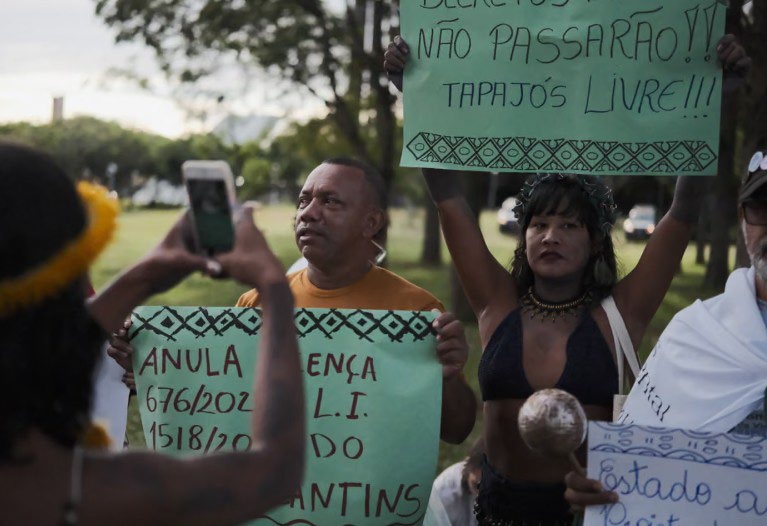
Community Mobilization in Defense of River Ecosystems
Communities across the Brazilian Amazon have mobilized against infrastructure and resource- extraction projects perceived to threaten river ecosystems and traditional livelihoods. Indigenous organizations, environmental groups, and local residents have raised concerns about the cumulative impacts of illegal mining, river dredging, and transportation infrastructure projects that could alter fragile hydrological systems. For many communities, rivers are not only ecological assets but also the foundation of food security, mobility, and cultural identity.
Environmental Risks Linked to Mining Expansion
Illegal gold mining and related activities have intensified environmental pressures in parts of the Amazon basin. Mercury contamination, deforestation along riverbanks, and sediment pollution are increasingly affecting water quality and biodiversity. Environmental advocates argue that expanding extraction and infrastructure without adequate safeguards could accelerate ecological degradation in one of the world’s most sensitive ecosystems.
Social License and the Role of Local Stakeholders
The resistance movements emerging across the Amazon illustrate how community participation is becoming central to the governance of natural resource projects. Indigenous groups and local organizations are demanding stronger consultation processes, environmental protections, and recognition of territorial rights. These dynamics reflect a broader trend across the global mining sector, where long-term project viability increasingly depends on securing a durable social license grounded in stakeholder engagement and environmental accountability.