
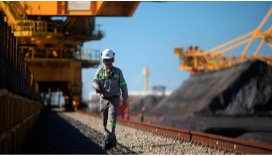
On September 4, 2025, Brazil’s competition authority (Cade) opened an antitrust investigation into Anglo American’s proposed US $500 million sale of its nickel operations to Chinese-backed MMG Singapore Resources. The probe was triggered by a complaint from rival company CoreX Holding, raising questions about potential market concentration and competitive fairness. While the investigation does not automatically halt the transaction, it injects fresh uncertainty into Anglo American’s wider restructuring efforts, which aim to streamline its portfolio and strengthen its financial position amid volatile commodity markets.
The case has attracted international attention because nickel is a critical mineral at the heart of the global energy transition. Used in electric vehicle batteries and stainless-steel production, nickel demand is projected to grow sharply in the coming decade. The involvement of MMG, with links to Chinese capital, has fueled concerns among policymakers and industry groups about Beijing’s expanding influence in strategic mineral supply chains. The American Iron and Steel Institute has already flagged the deal as a potential risk, warning of heightened Chinese leverage in a market central to North American and European manufacturing ambitions.
For Brazil, the outcome of this probe will resonate far beyond a single transaction. As one of the few countries with significant nickel reserves, its regulatory decisions shape not only domestic market dynamics but also the global balance of mineral supply. A decision to approve, delay, or impose conditions on the sale will send strong signals to investors and governments alike about how Brazil intends to manage foreign participation in strategic sectors. The probe thus sits at the crossroads of competition law, industrial policy, and geopolitics, underscoring how mineral markets are increasingly contested spaces of global power.