
Written by Loren Stoddard.
The $50 Billion Vacuum Development aid just collapsed. Capital is still flowing. Who engineers prosperity now?
Sequel to: The $20 Million Per Week Problem (January 2026)
Two days ago, roughly 50 billion dollars in development aid came off the table. In real terms. In one year.
Not a budget cut. A structural break. The largest annual contraction in the history of official development assistance.
According to OECD data released April 9, ODA fell 23.1 percent in 2025. The United States cut 57 percent. Germany, France, and the United Kingdom all cut simultaneously for the second consecutive year. A first in history. A further decline is projected for 2026.
For twenty years, there was an implicit contract. Governments funded the conditions that made private investment viable. Schools. Clinics. Roads. Agricultural systems. Job training. The system that kept communities stable enough for mines to operate, pipelines to get built, and energy projects to reach financial close.
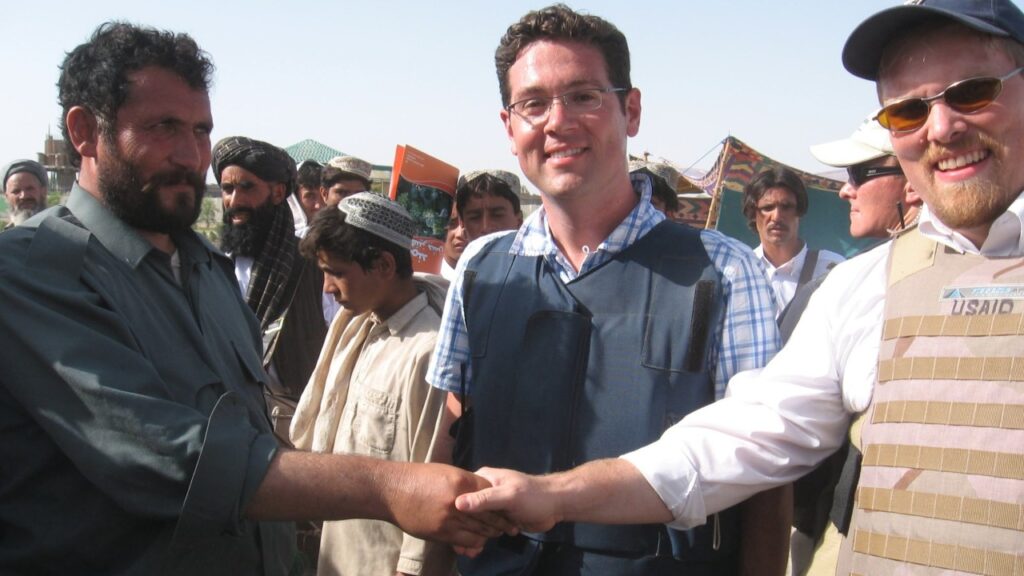
I spent most of those twenty years on the other side of that contract, managing the development portfolios that built the stability private capital depended on.
Afghanistan. Peru. Sudan. South Africa.
I watched what happened when the system worked. And I watched what happened when it didn’t.
To my colleagues who built that system: I know what this moment feels like.
Programs cancelled. Teams disbanded. Local partners left exposed. Often mid-project, mid-harvest, mid-build.
Decades of institutional knowledge walking out the door.
The work was real. The results were real.
Peru’s cacao industry, which we helped build from 50 million dollars to over a billion, is still growing. Health clinics across Africa are still running on power systems we helped build.
The question is not whether what we built mattered. It did.
The question is what carries it forward now that the institution behind it is gone.
That system is now gone. The money is not coming back.
ODA did not solve stakeholder risk. It buffered it. As that buffer disappears, the risk does not go away. It moves. Onto operators. Onto lenders. Onto insurers. Onto balance sheets.
This is not a funding gap.
It is a risk transfer.
And most of that risk just landed on balance sheets that are not built to price it.
And it exposes a truth that capital markets have been able to avoid until now.
Stakeholder risk is not social.
It is credit.
Credit just lost its buffer.
The Thesis, Three Months Later
In January I published The $20 Million Per Week Problem on this platform. The argument was simple. Stakeholder conflict is now the dominant driver of value destruction in mining. Projects lose 20 million dollars per week in delay costs. Markets discount mining companies by 72 percent due to stakeholder conflict. Total documented value destruction from Cobre Panama to Panguna to Jadar to Las Bambas exceeds 50 billion dollars.
I proposed that what was missing was not another ESG framework. Not another community relations budget. Not another social license survey.
What was missing was a capital governance mechanism that treats stakeholder prosperity as a predictive variable of asset survivability and prices it into financing.
I called it Stakeholder Prosperity Assurance.
Three months later, after presenting at PDAC 2026, after scoring real assets across Peru, Zambia, Panama, and Ghana, and after subjecting the framework to adversarial stress testing, the thesis holds.
The opportunity is not mining. It is capital itself.
The Market That Failed
The sustainability linked bond market was supposed to solve this. It did not.
Published market data tells the story.
SLB issuance peaked at 115 billion dollars in 2021. It has since fallen roughly 70 percent.
88 percent of targets are environmental. Only 8 percent are social.
The probability of missing targets is 14 to 39 percent.
Companies set goals that are easy to reach. The average penalty is 31 basis points.
For a company like Enel, that is 0.44 percent of total interest expenses.
Penalties too small to change behavior. Targets too easy to miss.
And no SLB in the market measures the one thing that actually determines asset survival in high risk jurisdictions: whether the people around the investment are getting better off.
The SLB market treats stakeholder outcomes as sustainability targets. They are not. They are credit variables. And the market has been mispricing them for a decade.
The sustainability bond market now exceeds one trillion dollars in annual issuance. Twenty times the aid that just vanished. Yet only about 14 percent flows to emerging markets. Almost none of it measures community prosperity. The market built the instrument. It pointed it in the wrong direction.
What Exists Now
Since January we have built infrastructure behind the concept.
VSPARR, the Veridicor Stakeholder Prosperity Assurance Risk Review, scores investment environments across 13 drivers and 39 sub-drivers. Regulatory trajectory. Community engagement quality. Household income reality. Market access. Environmental livability. Prosperity trajectory perception. It produces a single SPA rating that represents the probability of stakeholder driven disruption to capital.
We have scored real assets. Constancia. Quellaveco. Cobre Panama. A copper and energy corridor in northwest Zambia. Each produces a risk band in basis points, a causal chain linking prosperity to capital impact, and recommended interventions.
Each scored using public data, cross validated against observed outcomes.
These are not models built from literature. They are built from three decades of watching projects succeed and fail across corridors I worked in personally.
The Stakeholder Prosperity Bond embeds those insights into capital structure. An issuer issues debt with prosperity linked covenants. Meet the targets, the rate stays low. Miss them, it steps up. Always paired with SPA Solutions, the designed interventions that close the gaps, and VSPARR monitoring that verifies delivery.
The thesis, now locked: SPA risk is not the risk posed by stakeholders. It is the risk created when stakeholder prosperity is not credibly assured.
Same Structure. Different Sector. Same Physics.
Mining is the proving ground. The pain is most visible. The case studies are undeniable. But the logic applies everywhere capital depends on community conditions for operational survival.
Energy infrastructure. Pipelines, power lines, wind farms, dams. Renewable buildouts in Kenya, Senegal, India, and South Africa are hitting the same resistance patterns mining hits. Same surface area. Same physics.
Large infrastructure. Ports, highways, rail corridors, economic zones. Resettlement is one of the most litigated issues in development finance history. Every major corridor displaces communities whose cooperation determines whether the asset operates or sits idle.
Regional banks in emerging markets. A bank whose portfolio serves a depressed region benefits when local prosperity improves. The Development Bank of Rwanda showed this in 2023. First sustainability linked bond by any development bank globally. Oversubscribed at 110 percent. Social KPIs.
Agribusiness corridors. Cocoa, palm oil, coffee. Deep community dependency. I spent five years doing exactly this in Peru. When we started in 2009, the country’s cacao exports were roughly 50 million dollars. Today they exceed a billion. San Martin was the engine behind that transformation.
The Demand Signal
The richest companies in the world depend on mined inputs. They are getting sued for it.
The DRC filed criminal complaints against Apple. Investigations have tied Ford’s aluminum supply chain to a Brazilian refinery facing major pollution allegations. Global Witness has linked conflict minerals to products by Apple, Intel, Samsung, Nokia, Motorola, and Tesla.
These companies do not issue SPA Bonds. They create the demand signal for supply that survives scrutiny. A mine with verified prosperity monitoring is one an OEM can source from with defensibility. A mine without it is a lawsuit in formation. They do not control the mines. But they will increasingly determine which ones survive.
What I Have Learned
The thesis holds. Fifty billion in documented value destruction. No instrument at scale in the global sustainability bond market combines prosperity measurement, designed solutions, and covenant pricing. The gap is real.
Execution requires discipline. The full VSPARR is the right diagnostic. Bond covenants need simpler triggers. The path: VSPARR as the monitoring layer, 3 to 5 headline KPIs distilled into covenant language. The methodology informs the covenant. The covenant does not replicate the methodology.
Verification must be independent. An instrument that depends on one company’s proprietary methodology will not scale. Veridicor must partner with DFIs and multi-stakeholder bodies to co-govern the scoring.
Attribution must be solved. Community prosperity depends on factors beyond any issuer’s control. The framework needs a reasonable contribution standard, not full control. Solvable. But it must be solved before the first issuance.
What Happens Next
This transition will not happen evenly. It will move through the system in a predictable order.
Insurers move first. They already price stakeholder risk. They do it with inferior data. VSPARR gives them a structured, repeatable system. They do not need the bond to exist. They need better data.
Operators move next, under pressure.
Agribusiness proves the model.
Infrastructure and energy scale it.
Downstream players enforce it.
By then the methodology has a track record. The verification is independent. The triggers are clear.
The first pilot is already being structured.
The first Stakeholder Prosperity Bond becomes real.
The Real Question
The collapse in development aid did not create this problem. It exposed it.
For decades, stakeholder stability was funded indirectly. Now it must be funded explicitly. Not as a side program. Not as a reporting framework. As a structured, measurable, enforceable condition of capital.
If you still believe the SDGs were the right goals: what market pays for them now that governments have left the field?
I would welcome hearing from anyone who sees the same convergence. Whether you operate a mine, structure a bond, underwrite political risk, manage a development portfolio, or build infrastructure in a community that is watching to see whether this investment makes their lives better.
Stakeholder risk was never social. It was always credit.
The first deals will set the standard. After that, capital enforces it.
linkedin article