
Written by Loren Stoddard.
THE SPA LETTER · No. 6 · LOREN STODDARD
In 1949, a young engineer stepped off a train in Anand, a dusty town in western India, and he did not want to be there. Verghese Kurien’s American scholarship required government service, and his assignment was the failing creamery in Anand. There was nothing in the town he wanted, and he kept asking to leave. Next door, a farmers’ cooperative was fighting for its life against the traders who set the price of milk, and its chairman, a stubborn Gandhian named Tribhuvandas Patel, kept knocking on the young man’s door with the same request: fix our machines.
He stayed fifty years.¹
What he built with those farmers is easy to describe and hard to overstate. He built a chain that ran from a woman’s steel pail to cash in her hand. The milk was tested in front of the woman who carried it, the price was set by the test rather than by a trader’s mood, and the cash was paid the same day, morning and evening. The dairies belonged to the farmers, and the managers answered to the farmers who hired them and could fire them. When the experts said that milk powder could not be made from buffalo milk, his colleague H.M. Dalaya made it anyway, and the buffalo tied up behind a village house became a national asset. A brand called Amul carried a smallholder’s milk to the whole country. When India copied the design nationwide, the program was called Operation Flood, the largest dairy program ever run, and a country that once imported milk became the largest producer of it on earth. Millions of families, most of them owning two or three animals and a steel pail, still collect the dividend today.
India called him the Milkman. Look at what he actually did. He did a job that no one had named yet. He designed a chain that turned money into household income, he built the ownership that let the income grow, and he made the payment something a person could count at the moment it reached a family’s hands. That is not a milkman. That is an engineer, working fifty years in a profession that no one had founded.
He is not a rare exception. Everywhere money meets a community, the same imbalance holds. Ask a project team what it measures and the answers come back with decimals: cost per tonne, capex per megawatt, return to the last basis point. Ask what the community budget measures and you get a theme. This is not because the people involved lack rigor. It is because the cost side of a project received a hundred years of engineering, while the prosperity side never got its start. One side brings numbers and the other side brings a story, and in a room where capital is handed out, numbers win every time.
Every branch of engineering makes the same promise: the result stops being an accident. A bridge does not happen to hold. The load was calculated, the design was drawn, and a person signed their name to it. For two hundred years, prosperity around capital has been left to chance, sometimes good chance, usually not. Prosperity engineering exists to end the accident. It exists to make prosperity something you design, and then prove.
No one funds a discipline they think is just a department.
And the shortage that forces a discipline into being has just arrived. Official development assistance, the core of global foreign aid, fell about 23 percent in real terms in 2025, the largest annual contraction on record by the OECD’s preliminary count.² The donor money that used to cushion the community side of mines, dams, and pipelines is shrinking fast. More and more, prosperity will have to be built into a project’s own budget and design, instead of being paid for by a separate aid system running alongside. Someone has to engineer it, and someone has to organize that engineering into something capital can pay for.
Engineering has lived through this moment before. In 1947, a purchasing engineer at General Electric named Lawrence Miles took a wartime problem and turned it into a method. During the war, scarce materials had been swapped for substitutes that often worked as well or better for less money. Miles asked why that should only happen in emergencies. His method was simple: ask what the part actually has to do, then find the cheapest reliable way to do it. He wrote the method down, trained teams in it, and gave it a name.³ The Navy built the first program around it, the Pentagon adopted it, and eventually federal law required it.⁴ Before Miles, “more function for less money” was an instinct that good engineers had. After Miles, it was a profession with a payroll. A shortage does not only force workarounds. It forces new disciplines into being.
We should be fair about what already exists here, because the people doing this work deserve better than a cartoon. Social impact assessment studies the consequences. Social performance manages the promises. Community development builds skills. Results-based finance pays for results that were named in advance. IFC’s standards call for baselines and monitoring. Each of these does part of the job, and does it seriously. What no one has yet joined into a single, recognized discipline is the full chain: a clear starting point, a designed path from money to household results, an outside check, and a financing consequence when the results come in. The parts are a hundred years old. The thing that connects them is missing.
So here it is.
The Discipline
Prosperity engineering is the discipline of designing how capital, institutions, markets, and delivery systems work together so that each dollar builds the greatest lasting prosperity for stakeholders. The results must be independently checked. The design must make financial sense, protect the environment, be fair, and never dump avoidable harm on people who lack the power to refuse it.
Prosperity is what a mother can see. It is not an index. It is food in the cupboard, a wage paid on time, and a little money left at the end of the month. It is shoes that fit and a school that opens, a clinic with medicine on the shelf, water she can give her children without boiling it, and air safe enough to let them play outside. It is a deed with the family’s name on it, something saved, and a bad year that did not cost them the farm. All of it must be countable by someone with nothing to gain from the answer. Put it together and one result matters most: she can sleep. No claim of stakeholder prosperity survives a valley of angry mothers.
Prosperity is what a mother can see.
Prosperity is not identical everywhere, and this charter does not define it for every valley. In one place it is titled land, in another a trust, in another a dividend, in another a passbook. Incomes matter, and so do health, schooling, water, and roads, and the right mix belongs to the people who live there, not to a formula. What the discipline fixes is not the content but the standard. Every claimed element of prosperity must be something a household can see, something a disinterested counter can count, and something reported without averaging away the people it missed. The mother’s list is not a poem. It is the specification.
Two words make the name, and both were chosen on purpose.
Prosperity
Prosperity is an old word. By the oldest telling its root points to hope, and its settled meaning is a life turning out favorably, the way a person wished it would. It is not office language. It is the word people use about their own lives. A mother does not say she wants development for her children. She says she wants them to do well, to have enough and a little over, to be safe. That is prosperity, and it belongs to her, not to a report.
Notice also what the word refuses to settle for. This field already has a vocabulary, and it names necessary things. Consent is a right, and winning it honestly is real, ongoing work. Consulta previa, the prior consultation required across much of Latin America, puts that right into law. A benefit plan sets money aside, and a social license, earned and kept, means a community still welcomes the work. Every one of these is necessary. None of them, by itself, is evidence that a family lives better than it did before. A project can honor every process and still leave the valley unchanged. That is the line prosperity refuses to blur, and there is a plain way to see it. Consent can be recorded in a room. Prosperity has to prove itself again every morning: when the workers wear the company’s shirt on their day off, and when a mother hopes her children will work there. Prosperity begins where compliance ends. The aim is not a truce over compensation. It is a valley that gains, visibly and at scale. Where costs remain, they are named, minimized, and answered, never averaged away.
Engineer
Engineer is a word you have to earn. In many jurisdictions the law protects the professional title, and it carries a promise that softer words do not. A designer suggests. A manager watches over. An engineer signs, and when the bridge comes down, it is the engineer’s name on the paper. The word means three things at once: the result was built on purpose, a person stands behind it, and anyone who doubts it can test it.
So why join them? For two hundred years, prosperity around big money has been treated as luck, or charity, or something that might happen if the project goes well. Engineering is the one trade that refuses to leave the result to luck. Put the two words together and you make a claim: prosperity can be designed, built to a standard, tested, and signed for, the same way a bridge is. The soft thing people care about, held to the hard standard people trust. The whole argument fits in the name.
Cost engineering asks how cheaply the thing gets built. Prosperity engineering asks how much real, checked prosperity the money builds. It is the same logic Miles used, applied to a different question. Prosperity engineers rarely create the wealth themselves. They design the structures that let millions of ordinary people create it for themselves. And one thing should be said about the title now, and settled fully near the end of this letter: The professional title and regulated practice of engineering are protected in many jurisdictions, and this discipline will respect those boundaries. Until independent standards exist, the working title is Prosperity Designer, and the honorary title used in the roll that closes this letter is exactly that, an honor and not a license.
The discipline has three verbs.
Design the structures that let prosperity grow instead of leak away: land titles, shared ownership, revenue terms written before the first shovel goes in, and supply chains a bank will lend against.
Convert investment into household results. Spending only records what went in. Conversion shows up in someone’s income, someone’s savings, a number a statistician will stand behind. A budget is a promise. A conversion chain makes the promise something you can test.
I have seen the difference in a single room. Years ago I led important visitors to meet a woman who had just received a land title, one of a program’s proud numbers. There were flies everywhere, and her children eyed the crackers we had brought for the guests. She did not know what the title was for, and she was right, because for her it was not yet for anything. No bank would lend against it, no market made her land worth improving, no crop was waiting for secure ground. The paper had been delivered. The chain that makes a paper worth something had not been built. That is the difference this discipline exists to close.
Verify from the outside, by someone whose signature carries weight and whose pay does not change with the answer.
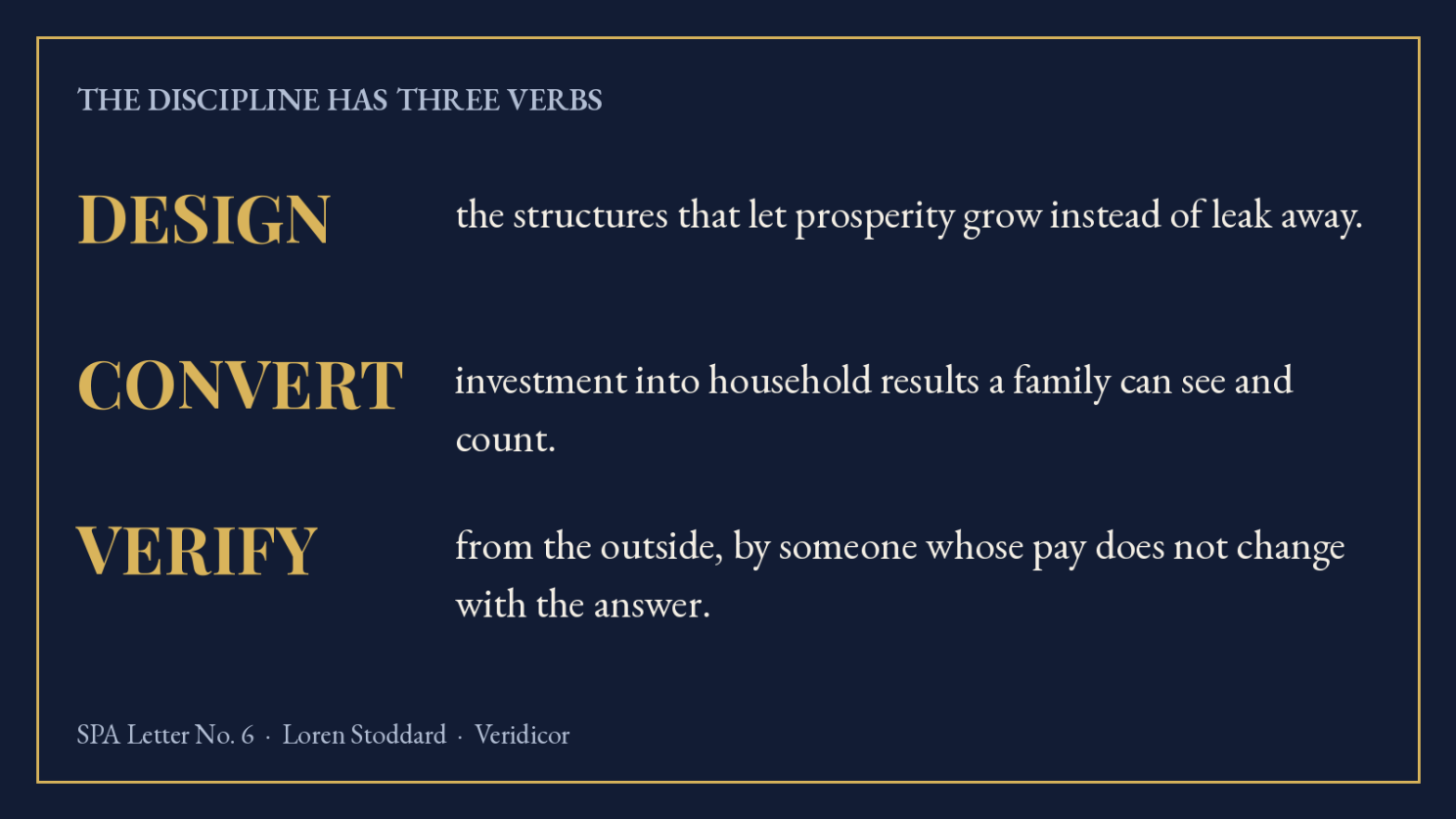
One rule sits above the rest: the person who designs the chain may not be the one who confirms that it worked. The engineer designs. The verifier signs. The market sets the price.
The rest of the charter is short. A single score may sum up the result, but it may not hide who gained and who lost, and no one gets averaged away. The practitioner’s first duty is to the truth of the claim and the rights of the people affected, not to the closing and not to the fee. Legal rights, cultural rights, and free, prior, and informed consent are limits, never trade-offs.
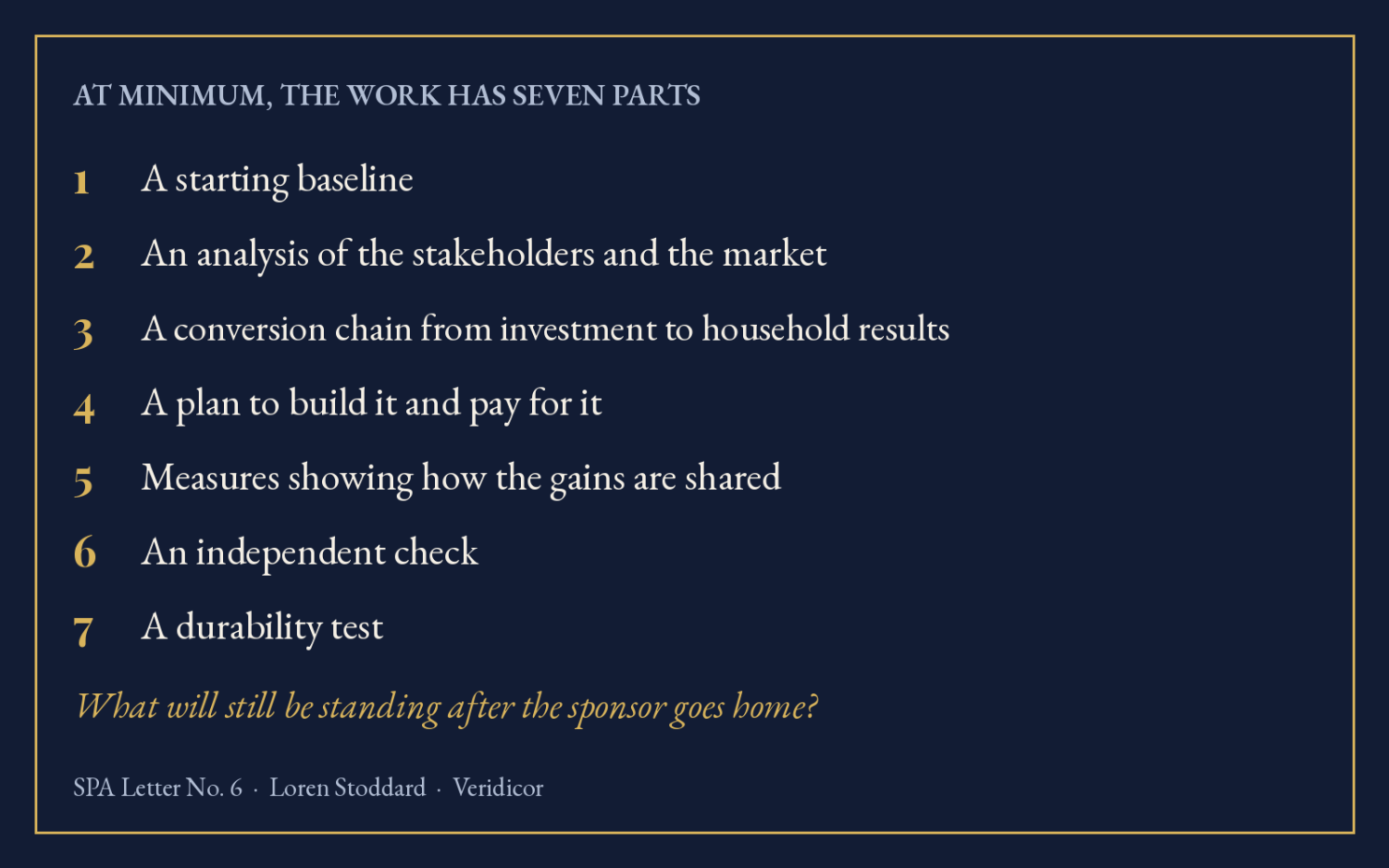
The minimum work has seven parts: a starting baseline; an analysis of the stakeholders and the market; a conversion chain from investment to household results; a plan to build and pay for it; measures showing how the gains are shared; an independent check; and a durability test. What will still be standing after the sponsor goes home?
A profession is also defined by what it refuses to certify: spending with no chain behind it, a report with no honest baseline, a check run by the same person who did the design, and success announced while the wider economy stays dependent. A founder can name a discipline, but no founder can own a profession. No firm that designs the work, including Veridicor, may be the only judge of whether it passed.
Literature wrote this job description first. In 1862, Victor Hugo handed Jean Valjean, living under the name Madeleine, exactly this task. Madeleine rebuilt a dying town’s one trade with a cheaper gum in place of costly resin and a bent clasp in place of a soldered one. Costs fell, wages rose, and the whole district did well. Then Madeleine fell, and the industry fell with him, because the town’s prosperity had been built into a man instead of a structure.⁵ That is why the charter ends with a durability test.
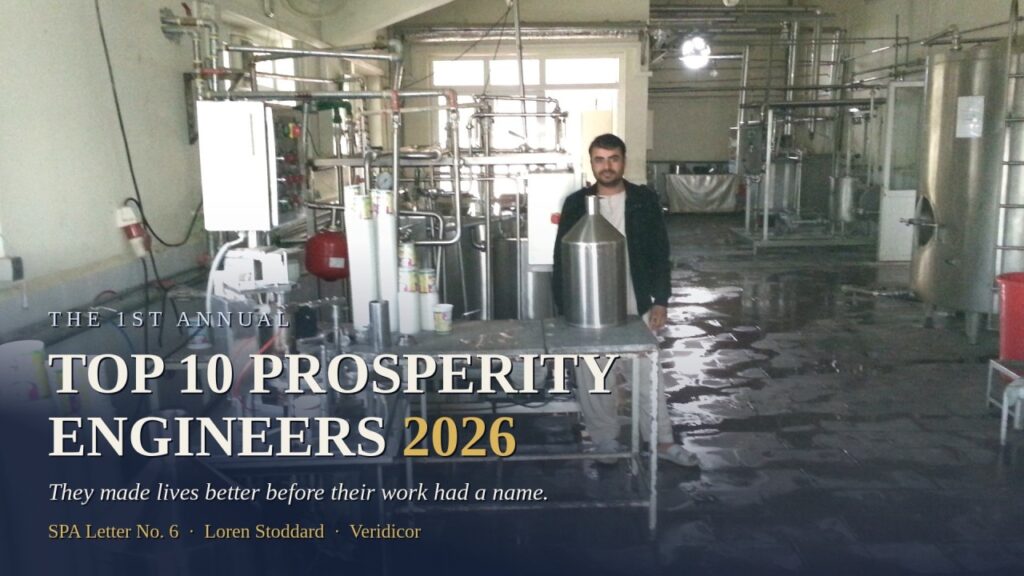
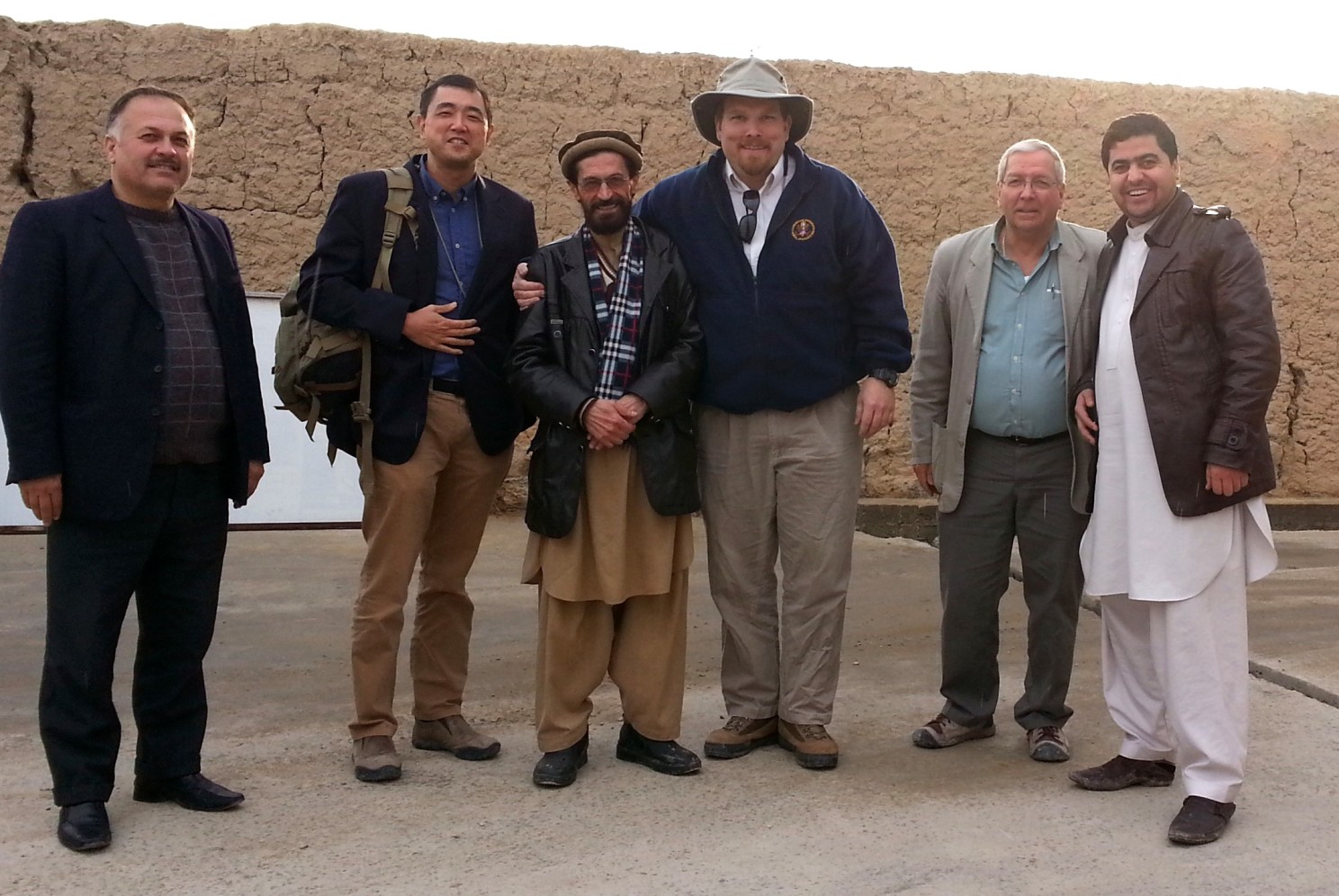
If you have spent a career in community relations, social performance, or development, none of this is news to you. Your job was never only relations. At its best it was already engineering, just without the title, the authority, or the money behind it. I know because I did this work for thirty years, with a salt producer in Chile, a juice factory in Kabul, and a cacao valley in Peru. In all that time, no one seemed to know what I was doing. The work had results. It just had no name.
Where the Spark Comes From
A fair question follows any charter like this one. Who is supposed to do this work? Some readers will worry that the answer is outsiders, arriving with plans for people who never asked for them. The worry deserves a straight answer, because the history of failed development is full of exactly that arrival.
The honest answer is that the spark can come from anywhere. Sometimes it comes from inside. Eighteen farmers in a mud-brick room struck it. Twenty-eight weavers with one pound each struck it. Four thousand women with ten rupees each struck it. And sometimes it comes from someone who moved. Kurien was a young man from Kerala sent across India to Gujarat against his will. Abed was a migrant who came home from London to a country in ruins. Arizmendiarrieta was a priest assigned to a Basque town he had never seen. Farouk Al-Kasim was an Iraqi geologist who walked into a Norwegian ministry looking for work and ended up helping write the rules for the North Sea. Movement of every kind runs through these stories: migration, exile, return, and plain reassignment. It is not hard to see why. A person who has just arrived sees a place with new eyes. They notice what everyone else has stopped noticing, and they question what everyone else has stopped questioning. Country after country has seen the pattern, with newcomers founding a share of new enterprises well beyond their numbers, though the pattern is strong in some economies and weaker in others.
So the discipline does not ask where the engineer came from. It asks something harder. Whoever strikes the spark, the fire must belong to the community, and the test of the engineering is what remains when the engineer leaves. Kurien’s dairies belonged to the farmers from the first day, which is why they outlived him. Arizmendiarrieta never owned a share of Mondragón. The women owned SEWA Bank, not the lawyer who organized them. An outsider who builds a structure the community ends up owning and running has done the work. An insider who builds a structure that depends on him forever has not. The failure Hugo described was not that Madeleine was a stranger. It was that the town’s prosperity lived in him instead of in something the town owned. Origin is not the standard. Ownership is. The engineer’s success is measured by how completely the engineer becomes unnecessary.
Three Forerunners, Stress-Tested
These are not proofs. None of them met the full standard proposed here, because the standard did not exist yet. They beat the standards they had. Each one runs through the charter’s own questions: what was designed, who owned it, what money paid for it, who checked what, and where it fell short. The stress test is part of the honor. You do not test what you do not respect.
And watch the word prosperity as it moves through these cases, because it never wears the same clothes twice. In Peru it is a land title and a cacao contract. In Kenya it is a dividend from a factory the farmers own. In the Arctic it is a trust and a hiring rule written into a mine’s own contract. The content changes with the valley. The standard of counting does not.
San Martín, Peru. My own role, disclosed up front: I was inside this one, so scrutinize it accordingly. Before: a coca economy, poverty near 70 percent, and an insurgency living off the edges. The design: land titles, farmer cooperatives, and certified cacao and coffee chains that made a smallholder’s harvest worth lending against. The money, by the UN’s own count: mostly Peruvian public investment, roughly four-fifths public, most of the rest private, and about one percent international aid, with donor-funded design organizing far larger local resources. The check: Peru’s independent statistics agency recorded poverty falling from about 70 percent to 31 percent between 2001 and 2010.⁶ The chain claims a real contribution, not ownership of the miracle. And the case is not clean. Agricultural expansion also put pressure on the forest. Shade cacao and reforestation answered part of that damage, not all of it. Prosperity that consumes the forest fails the durability test, which is why the charter makes environmental protection a limit and not a footnote. The credit belongs to the farmers who bet titled land on cacao, to the cooperative treasurers who kept honest books through a war, and to the statisticians who counted without flattering anyone.
The Kenyan tea highlands. Before: the estates owned the processing, and the smallholder sold leaf at whatever price the gate offered. The design put the growers at the top of the ownership instead of the bottom. Through their own tea companies, some 600,000 farmers own the factories that process their leaf, with monthly payments, an annual bonus, and a dividend written into the model. An IFC case study, using 2013 results, estimated that these farmers received 75 to 80 percent of the realized tea price, a bigger share than farmers in neighboring countries, on the strength of grower ownership and loans they repay themselves.⁷ The smallholder system has held for sixty years, through changes of institutional form, many governments, and many fights. Ownership changed who got the money. It did not change the weather.
Nunavik, Canada. Before: a nickel deposit in Inuit homeland, and an industry whose standard offer was jobs at the gate and a donation at year-end. In 1995, Makivik Corporation and the communities of Salluit and Kangiqsujuaq negotiated the Raglan Agreement and wrote Inuit prosperity into the mine’s own operating contract: 4.5 percent of operating cash flow into community trusts, hiring rules, and contracting preferences that grew Inuit-owned suppliers to about a quarter of the mine’s contracted services. The money was the mine’s own cash flow, not a separate donor program. Company reporting now puts the payments at about 261 million Canadian dollars since 1995.⁸ That confirms money moved, not that prosperity was built, and that gap is exactly the question this discipline exists to answer. The credit belongs to the negotiators who made a mining company’s cash flow answer to the people whose homeland held the ore, and who got it in writing.
The record extends far beyond these three cases. This letter ends with ten more.
The Stakes
For the practitioner, this is a promotion, and a higher standard. Quality engineers did not earn their seat at the table by asking companies to care more. They earned it by designing failure out, and their certification followed the work by decades.⁹ It is the same move here: not measuring the risk, but designing the fix, and handing the result to a verifier whose signature means something. Show the chain you built, and the checked prosperity a dollar produces through it, and you are not a department anymore. You are part of the reason capital can trust the project.
It also closes the industry’s quiet gap. Head office is paid in reputation and the site manager is paid in tonnes, and the community falls in the space between them. Speeches do not close that gap. Financing terms do.
For the investor: an asset with a real prosperity-engineering function should be underwritten differently from one with only a CSR budget. Not because its risk gets marked down more cleverly, but because someone built more into it, and an outside verifier can show exactly what. Whether investors will pay for that difference is what the first deals will test. There is a risk that the market uses the new lens backward, identifying assets without the discipline and simply pricing them down. If that is all this produces, it has failed. Risk pricing describes the hole. Engineering builds across it.
The Founding Test
The discipline now has a name, and a charter that no single firm, including Veridicor, may own. Reuters put the proposed first Stakeholder Prosperity Bond on the public record this spring: a 100 to 200 million dollar Zambia issuance targeted for this year, with the Democratic Republic of Congo and Ghana intended to follow.¹⁰ Most new disciplines start with a theory and go looking for work. This one starts with a transaction being built.
One promise concerns the title. Engineer is a word you have to earn, and in many jurisdictions the law protects the professional title. This discipline will respect both the standard and the law. Its path is clear: casebook, body of knowledge, ethical rules, independent exam, and proven practice. Until a standards body exists, and wherever the law reserves the title, the client-facing title will be Prosperity Designer. A future credential could be Prosperity Engineering Practitioner. This founding roll uses Prosperity Engineer, honoris causa: an honorary title, not a license and not an exam. It claims only gratitude. Getting the word right is the first proof that the profession means what it says about verification.
And here is the founding test. It is not a gate to keep people out. It is how a profession learns to recognize its own, because the people it honors are mostly unknown, and fixing that starts now. Do not claim the work because you ran a community budget, wrote an impact report, or helped a project win consent. Bring the conversion chain you designed. Show where the money went in. Show where the prosperity came out, in whose hands, and in the forms those households themselves count as prosperity. Show who checked it, from the outside. Show what was still standing after you left.
Documented cases would be the natural start of a casebook. From a tested casebook could come a body of knowledge, from the body of knowledge a standard, and from the standard an honest way to recognize practitioners. Casebook, knowledge, standard, exam, credential: that is the path an emerging discipline could walk to earn professional standing. The path belongs to the profession that may grow up around this work, not to any single firm or founding letter, and the standards, examinations, and credentials, if they come, must be governed independently of any firm, including Veridicor.
This letter does not create that profession, name its leaders, or admit its members. It does something smaller and earlier. It names the discipline, sets the standard, and lays a first body of evidence on the table.
The 1st Annual Top 10 Prosperity Engineers, 2026
The first roll begins with ten real cases. I will take one founder’s privilege: making the first nominations. These are nominations, not professional certifications. Each honoree is recognized here as a Prosperity Engineer, honoris causa, an honorary title, not a license. Readers may challenge the evidence, the interpretation, or the choice. That is how a profession grows.¹¹ Some seats recognize an individual founder; others recognize the coalition, institution, or community that carried the design into durable practice. And this begins a yearly tradition. Every year from now on, on November 26, Verghese Kurien’s birthday, already kept across India as National Milk Day, the roll will add its next ten. If the profession earns its name, its holiday will be a milkman’s birthday. That is not an accident. That is the point.
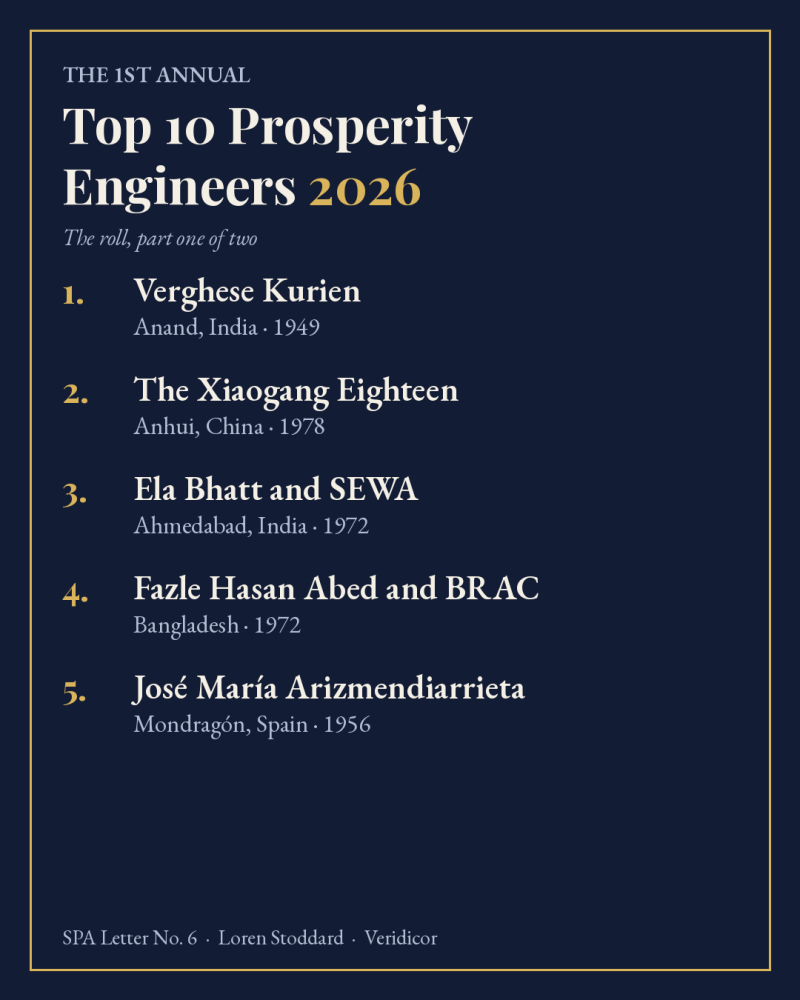
6. Seretse Khama and Botswana’s state-builders. Exiled by the British for marrying Ruth Williams across the color line, he gave up his own claim to be king, came home, and led one of the poorest countries on earth. When diamonds were found under his own tribe’s land, he moved the mineral rights to the nation. A negotiated half-share of the diamonds, banked and budgeted, carried Botswana to upper-middle income at some of the fastest sustained growth ever recorded, and later leaders built the Pula Fund to protect part of it. The wealth built a nation and its institutions. The unemployment and inequality that remain show that national prosperity does not reach every household on its own.
7. The KTDA smallholders and institution-builders, Kenya. Under colonial rule, tea was a settler’s crop and Africans were barred from growing it at any scale. Today, a grandmother can pick tea before dawn and send it to a factory she partly owns. Some 600,000 smallholders own the companies that process their harvest, and an IFC case study found they received roughly 75 to 80 percent of the realized tea price, a larger share than farmers in neighboring countries, because of grower ownership and loans they repay themselves.
8. Jay Hammond and the Alaska Permanent Fund designers. A bush-pilot governor watched Alaska rapidly commit most of a 900-million-dollar oil lease windfall, and decided the next boom would have to outlast the politicians who spent the last one. In 1976, Alaska’s voters approved a constitutional amendment dedicating specified future mineral revenues to a permanent principal the legislature could not spend. A dividend has been paid to every eligible Alaskan, newborn to elder, every year since 1982, audited to the dollar, and it built what Hammond called a militant ring of defenders around the fund.
9. The Makivik negotiators of the Raglan Agreement, Nunavik, 1995. Two Arctic villages of a few thousand people sat across from a global mining house. The industry’s usual offer was jobs at the gate and a donation at year-end. The negotiators wrote something stronger into the mine’s own operating contract: 4.5 percent of operating cash flow into community trusts, hiring rules, and contracting preferences that grew Inuit-owned suppliers to a quarter of the mine’s contracted services. About 261 million Canadian dollars since 1995, reported and in writing. Smaller in reach than any other name on this roll, and on it because this is the design the discipline now has to scale.
10. The Rochdale Pioneers, England, 1844. Twenty-eight weavers, locked out after a failed strike, scraped together one pound each and opened a store on Toad Lane stocked with little more than flour, oatmeal, sugar, butter, and a few candles. They ran it under one radical rule: profits come back to members in proportion to what they buy, and each member gets one vote. Robert Owen supplied the belief. The weavers built the structure that lasted, the template for a cooperative movement that now counts its members in the hundreds of millions.
Special recognition, the living seat: Gonzalo Ríos Núñez, general manager of ACOPAGRO in Juanjuí for twenty-seven years. An economist, he took over a cooperative of twenty-seven ex-coca farmers in a valley then controlled by Sendero Luminoso. He built it into an organization reporting more than two thousand associated producers, and into what Peruvian reporting describes as the country’s largest exporter of organic cacao. Its 2.2 million trees, planted with Pur Projet between 2008 and 2014 and verified under the VCS carbon standard, began as saplings poled upriver in wooden boats and planted along the Huayabamba as the members’ pension. The author’s interest is disclosed. The numbers belong to the cooperative and its certifiers.¹²
And one case is held back on purpose. The agronomists of Arauca ran the same cacao play with an oil field as the financier, but the household numbers are still the foundation’s own, and this letter will not nominate what independent verification cannot yet carry. Respect means waiting for evidence strong enough to carry the honor.
The underlying research already holds twenty-five candidate cases across five continents. They include the designers of M-PESA, whose effect on poverty was measured in Science; Frances Perkins, who turned a factory fire into an income floor for the old; Wolf Ladejinsky, who helped break the old landlord system across postwar Asia through land reform; and Farouk Al-Kasim, the Iraqi geologist who helped write the rules for Norway’s oil. The roll stays open. And one absence is an assignment. There is no name here from artisanal and small-scale mining, because our research has not yet found a documented, independently verified conversion chain at meaningful scale for the tens of millions who mine by hand. The Stakeholder Prosperity Bond being built in Zambia is an attempt to build and verify that missing chain. All of it is history, not proof of the bond. The instrument still has to earn its own record.
One measure of success is fixed in advance. If this profession works, its best practitioners will be people no one connects to this letter.
Kurien needed a stubborn cooperative chairman and a failing creamery. Miles needed a wartime shortage. Ours took a 23 percent collapse in aid. The instinct has been out there for two hundred years, working, real, waiting for the shortage that would force it into a profession. The shortage is here.
And if this letter leaves one thing behind, let it be a restored word. Prosperity is not the soft cousin of profit, and it is not a synonym for compliance. It is the oldest promise a project can make to the people who live around it, and the hardest one to fake: a life turning out the way a mother hoped it would, in her own valley, counted by someone she has no reason to doubt.
So before the next mine, dam, port, factory, fund, or public program breaks ground, ask four questions. Whose prosperity is being claimed? What chain turns the money into results those households can see? Who will own and run that chain after the sponsor leaves? And who will count the result from the outside, and what changes if the result is missed?
They made lives better before their work had a name. The least we can do is remember them. Then build what they taught us to see. Design it. Count it. Verify it. Leave it owned.
Peace is cheaper.
Notes
1. Verghese Kurien and Anand: National Dairy Development Board and GCMMF (Amul) records; Ramon Magsaysay Award citation (1963); World Food Prize (1989); FAO documentation of Operation Flood.
2. OECD, preliminary official development assistance data for 2025, DAC members (published April 2026): a 23.1 percent decline in real terms, the largest annual drop on record. OECD data explainer.
3. Lawrence D. Miles Value Engineering Reference Center, University of Wisconsin–Madison: career record, GE Coffin Award (1950), U.S. Navy Bureau of Ships program (1954), Navy Distinguished Public Service Award. See also Miles, Techniques of Value Analysis and Engineering (1961).
4. Value engineering institutions and statute: SAVE International (founded 1959); U.S. Department of Defense, SD-24 Value Engineering handbook; 41 U.S.C. § 1711; OMB Circular A-131, Value Engineering.
5. Victor Hugo, Les Misérables (1862), vol. I (“Fantine”), bk. V, ch. 1, on Madeleine’s re-engineering of the black-glass trade.
6. San Martín: UNODC, The Alternative Development Model in San Martín, including the investment-composition accounting; INEI, Evolución de la Pobreza al 2010, departmental poverty series, 2001–2010.
7. Kenyan tea: IFC/World Bank Inclusive Business case profile on KTDA (2013 results); World Bank Kenya Tea Development Authority project records; KTDA corporate reporting (company-reported).
8. Raglan: The Raglan Agreement (1995); Glencore Raglan community reporting (2026, company-reported): approximately C$261 million in profit sharing, allowances, and related payments since 1995.
9. American Society for Quality, certification program history: first Certified Quality Engineer examination, 1968.
10. Reuters, “Africa to pilot bond aimed at formalising artisanal mining,” April 8, 2026.
11. Nominations, by honoree:
Kurien: per note 1.
Xiaogang and the Household Responsibility System: State Council of the PRC, The Grain Issue in China (grain output series, 1978–1984).
SEWA: Self-Employed Women’s Association membership reporting and SEWA Cooperative Bank records (bank founded 1974); Ramon Magsaysay Award citation (1977); Right Livelihood Award (1984).
BRAC Graduation: Banerjee, Duflo, et al., Science (2015), six-country randomized evaluation, doi.org/10.1126/science.1260799.
Mondragón: Reuten, Journal of Labor and Society (2023), employment record 1983–2019; corporate annual reports (company-reported).
Botswana: IMF and World Bank documentation; Debswana shareholding records; Bank of Botswana, Pula Fund.
KTDA: per note 7.
Alaska: Alaska Permanent Fund Corporation history and audited financial statements; Alaska Department of Revenue, PFD Division records.
Raglan: per note 8.
Rochdale: Rochdale Pioneers Museum; International Co-operative Alliance.
Bench cases: M-PESA: Suri and Jack, Science (2016). Perkins: U.S. Social Security Administration historical records; Committee on Economic Security (1934–35). Ladejinsky: Louis J. Walinsky, ed., Agrarian Reform as Unfinished Business (World Bank, 1977). Al-Kasim: Norwegian Petroleum Directorate records. Arauca: Fedecacao regional statistics and Fundación El Alcaraván program reporting (foundation-reported figures).
12. Gonzalo Ríos Núñez and ACOPAGRO: cooperative and APPCACAO records (more than 2,000 associated producers); Agraria.pe reporting on organic cacao exports; Universidad del Pacífico (CIUP) Fairtrade case study; Pur Projet, Alto Huayabamba project documentation (2.2 million trees planted 2008–2014; VCS validation, first verification June 2014); UNODC, the San Martín model, per note 6.
linkedin article